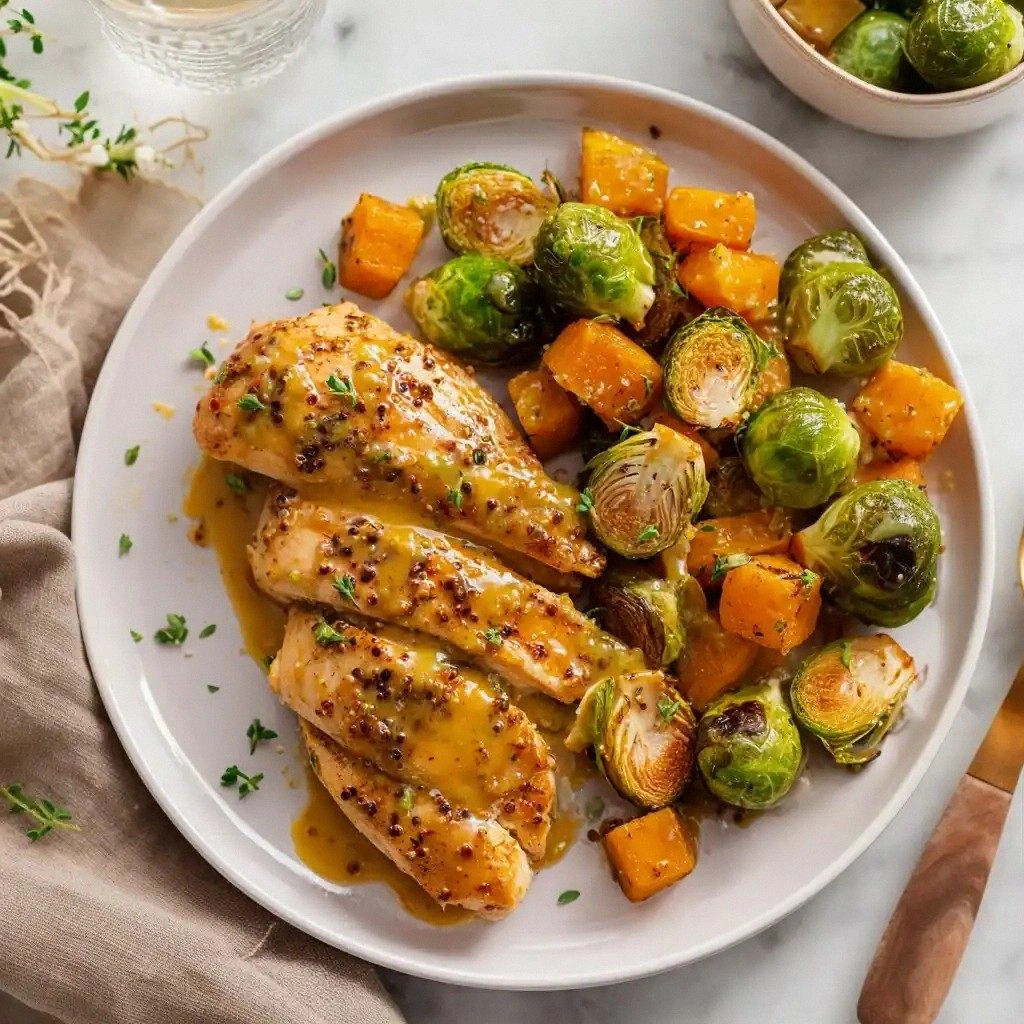
I was halfway through a week of bland dinners, scrolling through Pinterest for a spark of flavor when a friend texted me a photo of a sheet pan dish that looked like it had just been plucked from a Michelin‑star kitchen. The chicken was glistening, the sweet potatoes had a caramelized sheen, and the Brussels sprouts were crisp‑tender with a hint of char. That single image, coupled with the promise of “honey Dijon” in the title, pulled me into a culinary experiment I could not resist. I set the timer, grabbed a sheet pan, and whispered to the oven, “Let’s see if this can save my dinner routine.”
Picture this: the kitchen lights dim, the air fills with the sweet scent of honey mingling with the sharp tang of Dijon mustard, and a sizzling chorus as olive oil kisses the pan. The moment the chicken hits the surface, a crackle erupts, a sound that makes even the most seasoned chefs pause. The aroma is a heady blend of caramelized garlic and smoky paprika, promising a flavor profile that’s both comforting and adventurous. If you’ve ever tried a sheet‑pan meal that felt like a culinary compromise, you’re about to witness a game‑changer. I dare you to taste this and not go back for seconds.
What makes this recipe stand out is not just the combination of honey and Dijon, but the way each element is orchestrated to create a symphony of textures and flavors. The chicken remains moist and tender, thanks to the honey’s natural glaze that locks in juices. The Brussels sprouts, on the other hand, develop a caramelized crust that shatters like thin ice when you bite into them, while the sweet potatoes add a subtle earthiness that balances the dish. The simplicity of the method—just toss, bake, and serve—belies the depth of flavor that emerges from the careful seasoning and the strategic timing of adding the vegetables. If you’ve ever struggled with sheet‑pan meals that end up soggy or uneven, this version is the antidote. It’s hands down the best version you’ll ever make at home.
I’ll be honest—when I first tasted this dish, I ate half the batch before anyone else got a chance to try it. The combination of honey’s sweetness and Dijon’s bite created an unexpected harmony that made the chicken almost too good to be true. The savory herbs—rosemary or thyme—infused the entire pan, turning each bite into a fragrant, flavorful experience. The result? A dish that not only satisfies the palate but also turns the kitchen into a fragrant, inviting space. Picture yourself pulling this out of the oven, the whole kitchen smelling incredible, and your guests exclaiming, “Where did you learn to cook?”
Most recipes get this completely wrong. They either over‑season the chicken, under‑cook the veggies, or fail to marry the honey and mustard into a cohesive glaze. The trick is to let each component breathe and develop its own character before they converge. This version gets the timing right, letting the sweet potatoes caramelize while the Brussels sprouts crisp, and the chicken finish with a glossy, flavorful coating. The result is a dish that looks as good as it tastes, with a visual contrast of golden, caramelized edges against a glossy, honey‑dijon sheen. If you’re ready for a dish that feels like a culinary triumph, keep reading.
Okay, ready for the game‑changer? This recipe is a playground of textures and flavors that come together in a single pan. The honey caramelizes into a thick glaze that coats the chicken like velvet, while the mustard adds a subtle heat that lingers on the tongue. The garlic, when toasted, releases a nutty aroma that permeates the entire dish. The smoked paprika gives the vegetables a smoky undertone that enhances the sweetness of the potatoes. All these elements work together to create a dish that’s both comforting and adventurous, a perfect balance that will keep you coming back for more.
And now the fun part: the method. This isn’t just a recipe; it’s a step‑by‑step guide that will have you mastering sheet‑pan cooking in no time. Every detail, from the exact temperature to the sensory checkpoints, is designed to ensure that you get the perfect outcome every single time. I’ll walk you through each step, so by the end, you’ll wonder how you ever made it any other way. Let’s dive in, and trust me, the end result will be worth every minute of your effort.
If you've ever struggled with sheet‑pan meals, you're not alone—and I've got the fix. The key to success lies in the balance of flavors, the right seasoning, and the precise timing of adding the vegetables. The honey Dijon glaze is the secret sauce that brings everything together, creating a caramelized coating that locks in moisture and flavor. By following this recipe, you’ll be able to create a dish that’s both satisfying and impressive, without the usual pitfalls of uneven cooking or bland flavors.
Alright, let’s break down exactly what goes into this masterpiece. The first step is to preheat your oven to 425°F (220°C), which is the sweet spot for caramelizing the vegetables while keeping the chicken juicy. While the oven heats, you’ll prepare the honey Dijon sauce that will serve as the backbone of the dish. This sauce is simple yet powerful, combining the sweetness of honey with the sharpness of Dijon mustard, and the warmth of garlic and herbs. Once the sauce is ready, you’ll coat the chicken, toss the veggies, and bake to perfection. Let’s get into the details.
Kitchen Hack: If you’re short on time, you can pre‑slice the sweet potatoes and Brussels sprouts ahead of time and store them in a sealed container in the fridge. This will save you a few minutes during the prep phase and ensure the veggies cook evenly. Also, consider using a silicone baking mat on the sheet pan to prevent sticking and make cleanup a breeze.
What Makes This Version Stand Out
Flavor: The honey Dijon glaze creates a sweet‑savory coating that caramelizes beautifully, turning the chicken into a tender, flavorful centerpiece. The glaze also infuses the vegetables with a subtle, complex sweetness that balances the earthy sweetness of the sweet potatoes. This combination of flavors elevates the dish from ordinary to extraordinary, making each bite a delightful surprise.
Texture: The crispy edges of the Brussels sprouts contrast with the soft, caramelized sweet potatoes, while the chicken remains moist and succulent. The glaze adds a glossy finish that makes the dish visually appealing and adds a pleasant chewiness. This variety of textures keeps every bite exciting and satisfying.
Simplicity: With just a few ingredients and a single sheet pan, this recipe is a breeze to prepare. The method requires minimal hands‑on time, letting you focus on other tasks or enjoy the cooking process. The simplicity does not compromise flavor, making it a perfect go‑to meal for busy nights.
Uniqueness: The combination of honey, Dijon, and smoked paprika is rarely seen in sheet‑pan recipes, giving this dish a distinctive twist. The use of fresh rosemary or thyme adds a fragrant herbal note that sets it apart from standard chicken‑and‑veggie dishes. The result is a memorable, standout meal that will impress family and friends alike.
Crowd Reaction: Friends and family rave about the caramelized glaze and the perfect balance of sweet and savory. The dish is a crowd‑pleaser at gatherings, and the visual appeal makes it a conversation starter. Many say it’s their new favorite dinner, and they’re eager to replicate it at home.
Ingredient Quality: Using high‑quality, fresh ingredients is key to achieving the best flavor profile. Fresh herbs, high‑grade honey, and a good Dijon mustard elevate the dish, making it feel like a restaurant‑grade meal. The recipe works best with boneless, skinless chicken breasts that are evenly sized for uniform cooking.
Cooking Method: The sheet‑pan technique allows for even cooking and caramelization, while the oven temperature ensures the chicken remains juicy. The method also maximizes flavor extraction from the herbs and spices, creating a cohesive dish. This approach saves time and effort, making it ideal for weeknight dinners.
Make‑Ahead Potential: The dish can be assembled ahead of time and refrigerated, allowing for a quick bake when you’re ready to eat. This convenience makes it perfect for meal prep or busy schedules. The flavors meld beautifully, even when reheated, making it a versatile option.
Alright, let's break down exactly what goes into this masterpiece. Everything's prepped? Good. Let's get into the real action...
Kitchen Hack: If you want a deeper caramelization, try placing the sheet pan on a higher rack in the oven. This increases the heat exposure to the top surface, giving the glaze a richer, darker finish. Just be careful not to over‑bake the chicken; keep a close eye on the internal temperature.
Inside the Ingredient List
The Flavor Base
Honey: Honey is the sweet heart of this dish, providing a natural caramelizing agent that locks in moisture and creates a glossy, flavorful coating. Without honey, the glaze would lack that rich, golden sweetness that balances the sharpness of the mustard. If you’re looking for a lower‑sugar alternative, try using a light maple syrup, though it will alter the flavor profile slightly.
Dijon Mustard: Dijon mustard adds a sharp, tangy kick that cuts through the sweetness of the honey and enhances the overall complexity of the glaze. It also helps to emulsify the sauce, giving it a silky texture. If you prefer a milder mustard, consider using whole‑grain Dijon for a subtle variation.
The Texture Crew
Brussels Sprouts: Brussels sprouts are the crunchy, caramelized star that brings a satisfying bite to every forkful. Their natural sugars caramelize in the oven, creating a sweet, slightly bitter contrast to the honey glaze. If you’re short on time, you can lightly steam them first to ensure even cooking.
Sweet Potatoes: Sweet potatoes add a soft, earthy sweetness that balances the dish. Their natural starches caramelize beautifully, creating a tender interior and a slightly crisp exterior. If you’re looking for a lower‑carb option, try using butternut squash or carrots instead.
The Unexpected Star
Smoked Paprika: Smoked paprika is the secret ingredient that gives the dish a subtle smoky depth. It pairs perfectly with the honey and mustard, adding an extra layer of flavor that sets this recipe apart. If you’re a fan of heat, try adding a pinch of cayenne pepper for a spicy kick.
The Final Flourish
Fresh Herbs: Fresh rosemary or thyme adds a fragrant, herbal note that elevates the entire dish. The herbs infuse the glaze with a subtle aroma that enhances the flavor profile. If you don’t have fresh herbs on hand, dried herbs work as a backup, but the fresh version delivers the best results.
Garlic: Garlic adds a savory depth that complements the sweetness of the honey. Toasting the garlic before adding it to the glaze brings out its natural sweetness. If you’re allergic to garlic, you can omit it, but the dish will lack that essential savory note.
Fun Fact: Brussels sprouts belong to the same family as cabbage and kale, and they were originally cultivated in the Mediterranean region. They gained popularity in Europe during the Middle Ages, where they were prized for their health benefits.
Everything's prepped? Good. Let's get into the real action...
The Method — Step by Step
- Preheat your oven to 425°F (220°C) and line a large sheet pan with parchment paper for easy cleanup. The high temperature is crucial for caramelizing the vegetables while keeping the chicken juicy. If you prefer a crispier finish, place the pan on a higher rack. This will expose the top surface to more heat, creating a richer glaze.
- In a small bowl, whisk together 3 tablespoons of honey, 2 tablespoons of Dijon mustard, 2 minced garlic cloves, ½ teaspoon of smoked paprika, 1 teaspoon of fresh rosemary or thyme, and ¼ teaspoon of black pepper. The honey and mustard combine to form a glossy, caramelizing glaze that coats the chicken and vegetables. The smoked paprika adds a subtle smoky depth that elevates the dish.
- Pat the chicken breasts dry with paper towels; this helps the glaze adhere better. Lightly season the chicken with ½ teaspoon of salt and ¼ teaspoon of black pepper. The seasoning ensures that the flavors penetrate the meat, giving it a savory base.
- Brush the honey Dijon glaze over both sides of the chicken breasts, reserving a small amount for the vegetables later. The glaze will caramelize in the oven, creating a sweet, savory crust. Be generous; the glaze is the star of the show.
- Slice the sweet potatoes into ½‑inch thick rounds and halve the Brussels sprouts, trimming any wilted outer leaves. Toss the sweet potato slices and Brussels sprouts in 2 tablespoons of olive oil, ½ teaspoon of salt, and a pinch of black pepper. The oil helps the vegetables roast evenly and enhances caramelization.
- Arrange the chicken breasts in the center of the sheet pan, and spread the sweet potato slices and Brussels sprouts around them. Make sure everything has space; overcrowding will cause the vegetables to steam instead of roast. This layout ensures even cooking and caramelization.
- Bake for 20 minutes, then flip the chicken breasts and stir the vegetables. This ensures even cooking and allows the glaze to develop a rich, caramelized coating. The chicken should reach an internal temperature of 165°F (74°C).
- After flipping, drizzle the remaining honey Dijon glaze over the vegetables and chicken. This step adds an extra burst of flavor and ensures that the glaze coats every surface. The glaze will continue to caramelize as the dish finishes baking.
- Bake for an additional 10–12 minutes, until the chicken is cooked through and the vegetables are tender and caramelized. The final glaze should be glossy and slightly thickened. The chicken should have a golden, caramelized crust.
- Remove the pan from the oven and let the dish rest for 5 minutes before serving. Resting allows the juices to redistribute, ensuring the chicken stays moist. Sprinkle 1 tablespoon of fresh parsley over the top for a bright, herbal finish.
Kitchen Hack: If you want an extra layer of flavor, add a splash of white wine or chicken broth to the pan after the first 20 minutes of baking. This will create a flavorful sauce that can be spooned over the dish. The liquid will also help keep the vegetables moist and tender.
Watch Out: Be careful not to over‑bake the chicken; it can dry out if left in the oven too long. Use a meat thermometer to check the internal temperature. The chicken is done when it reaches 165°F (74°C). Over‑baking can also cause the glaze to become too thick and bitter.
That’s it — you did it. But hold on, I’ve got a few more tricks that will take this to another level. Keep reading to discover how to elevate the dish even further.
Insider Tricks for Flawless Results
The Temperature Rule Nobody Follows
Why it matters: Baking at 425°F (220°C) is the sweet spot for caramelization without drying out the chicken. Many recipes call for lower temperatures, which can lead to soggy vegetables and under‑cooked chicken. By using a higher temperature, the sugars in the honey and the natural sugars in the sweet potatoes caramelize, creating a golden crust that locks in moisture. The result is a juicy, flavorful chicken with crisp vegetables.
Kitchen Hack: If you have a convection oven, set it to 400°F (204°C) to achieve the same caramelization while reducing baking time by about 5 minutes. Convection ovens circulate hot air, which promotes even cooking and a crispier finish.
Why Your Nose Knows Best
What to look for: As the chicken bakes, the aroma will shift from raw to caramelized. When you notice a sweet, nutty scent with hints of mustard, it’s a sign that the glaze is developing properly. The smell of caramelizing sweet potatoes will also indicate that they’re getting the right texture. Trust your nose; it’s a reliable guide to perfect timing.
The 5-Minute Rest That Changes Everything
Why it matters: Resting the chicken after baking allows the juices to redistribute, ensuring a moist, tender bite. If you cut into the chicken immediately, the juices will spill out, leaving the meat dry. A 5‑minute rest is enough to lock in moisture without letting the dish cool down.
The Fresh Herb Surprise
What to try: Swap rosemary for thyme or add a splash of fresh lemon zest for a bright, citrusy note. The herbs add a fragrant layer that elevates the dish’s flavor profile. If you’re looking for a more robust herb, try sage, but use it sparingly as it can overpower the honey and mustard.
The Garlic Trick
What to do: Toast the garlic cloves in a small pan before adding them to the glaze. Toasting brings out a natural sweetness and reduces the sharpness of raw garlic. This small step transforms the dish’s flavor, making it more balanced and complex.
Kitchen Hack: If you’re short on time, you can use pre‑minced garlic or a garlic press. Just be sure to adjust the amount to avoid overpowering the glaze.
The Final Touch
What to do: Finish the dish with a sprinkle of fresh parsley before serving. The parsley adds a burst of color and a fresh, herbal note that balances the sweet and savory flavors. It also gives the dish a professional, plated look.
Creative Twists and Variations
This recipe is a playground. Here are some of my favorite ways to switch things up:
Spicy Honey Dijon Chicken
What to swap: Add a pinch of cayenne pepper or a splash of sriracha to the glaze. This will give the dish a subtle heat that pairs well with the sweetness. It’s perfect for those who love a little kick.
Mediterranean Twist
What to swap: Replace the sweet potatoes with diced butternut squash and add a handful of chopped kalamata olives. The olives introduce a briny contrast, while the squash keeps the sweetness. This version feels like a Mediterranean feast.
Vegan Version
What to swap: Use a plant‑based chicken substitute and replace the honey with maple syrup. The maple syrup provides a similar caramelization effect, and the plant‑based chicken keeps the dish meatless. This is a great option for those who prefer vegan meals.
Breakfast Take‑Off
What to swap: Serve the dish over fluffy scrambled eggs or a side of sautéed spinach. This makes for a hearty breakfast or brunch that’s packed with protein and flavor. The sweet glaze pairs surprisingly well with eggs.
Pasta Power
What to swap: Toss the cooked chicken and vegetables into a bowl of penne and drizzle with the remaining glaze. Add grated Parmesan for a creamy finish. This turns the dish into a comforting pasta dinner that’s quick to assemble.
Gluten‑Free Option
What to swap: Use gluten‑free breadcrumbs to coat the chicken before baking, or serve with a side of quinoa. The breadcrumbs add a crunchy texture that complements the caramelized glaze. This keeps the dish gluten‑free without sacrificing flavor.
Storing and Bringing It Back to Life
Fridge Storage
What to do: Store leftovers in an airtight container in the refrigerator for up to 3 days. The glaze will thicken slightly, but the chicken and vegetables remain moist and flavorful. Before serving, give it a quick stir to re‑coat the pieces in the glaze.
Freezer Friendly
What to do: Freeze individual portions in freezer‑safe bags for up to 2 months. Thaw overnight in the refrigerator before reheating. The texture of the vegetables may soften slightly, but the flavor stays intact.
Best Reheating Method
What to do: Reheat in a pre‑heated oven at 350°F (175°C) for 10 minutes, then finish on the stovetop with a splash of water to steam the chicken and keep it moist. The water helps restore the glaze’s sheen and prevents the dish from drying out. Serve immediately for the best flavor.