I still remember the first time I attempted to make spicy salmon bowls at home. It was a disaster of epic proportions — the salmon was rubbery, the rice tasted like cardboard, and don't even get me started on the sauce that separated into an oily mess. My roommate walked in, took one look at my sad attempt at Asian fusion, and politely suggested we order pizza. Fast forward three years, and I'm here to tell you that I've cracked the code to creating what might be the most addictive, restaurant-quality spicy salmon bowls you'll ever make in your own kitchen.
The secret isn't in some fancy technique or obscure ingredient that requires a pilgrimage to three different specialty stores. Nope, it's all about understanding how the coconut rice becomes this creamy, fragrant foundation that makes the spicy salmon sing, and how the sauce needs just the right balance of heat, sweetness, and acidity to make your taste buds do a happy dance. Picture this: perfectly seared salmon with crispy edges that shatter like thin ice, revealing tender, flaky fish that's been kissed with just enough spice to make things interesting, all nestled on a bed of coconut rice so aromatic you'll want to bury your face in it.
What makes this version different from every other recipe floating around the internet? I'll be honest — I ate half the batch before anyone else got to try it. That's how good this is. The magic happens when the spicy glaze caramelizes on the salmon, creating these sticky, lacquered edges that contrast beautifully with the cooling coconut rice. And here's the kicker: this entire masterpiece comes together in under 45 minutes, making it perfect for those weeknight dinners when you want something that tastes like you spent hours in the kitchen.
The best part? This recipe is foolproof once you understand a few key techniques that most recipes completely ignore. Like the fact that your salmon needs to be patted dry within an inch of its life before it hits the pan, or that coconut rice needs a specific ratio of coconut milk to water to achieve that cloud-like texture. Stay with me here — this is worth it. Let me walk you through every single step — by the end, you'll wonder how you ever made it any other way.
What Makes This Version Stand Out
- Flavor Bomb: The combination of sriracha, honey, and lime creates this perfect balance of heat, sweetness, and acidity that coats the salmon like velvet. Most recipes get this completely wrong by either making it too spicy or too sweet, but this version hits that Goldilocks zone that keeps you coming back for more.
- Texture Heaven: We're talking about salmon with crispy, caramelized edges and a tender, flaky interior that practically melts on your tongue. The contrast against the creamy coconut rice creates a textural experience that'll make you close your eyes involuntarily with each bite.
- One-Pan Wonder: Everything except the rice comes together in a single skillet, which means minimal cleanup and maximum flavor development. The salmon cooks in the same pan where we build the glaze, picking up all those beautiful browned bits that would make a French chef weep with joy.
- Meal Prep Champion: This recipe scales beautifully and tastes even better the next day when the flavors have had time to mingle and get to know each other. Picture yourself pulling this out of the office microwave, watching your coworkers' faces turn green with envy.
- Restaurant Quality, Home Cook Price: For the cost of one restaurant salmon bowl, you can make four servings at home that taste infinitely better. Plus, you control the quality of your ingredients — no mystery sauces or sad vegetables here.
- Customizable Heat: The spice level is completely adjustable, which means you can make it family-friendly or turn it into a five-alarm fire depending on your mood. I dare you to taste this and not go back for seconds, regardless of how much heat you add.
- Coconut Rice That Actually Works: Most recipes produce coconut rice that's either too sticky or too dry, but this version creates individual grains that are creamy yet distinct, infused with coconut flavor without being overwhelming.
Alright, let's break down exactly what goes into this masterpiece...
Inside the Ingredient List
The Flavor Base
The foundation of any great dish starts with understanding your ingredients, and this spicy salmon bowl is no exception. The salmon itself needs to be fresh, firm, and have that clean ocean smell — if it smells fishy, walk away immediately. I learned this the hard way after buying "discounted" salmon that made my kitchen smell like low tide at the pier. For the coconut rice, we're using a combination of full-fat coconut milk and jasmine rice, which creates this luxurious texture that's both creamy and fluffy at the same time. The key here is using the right ratio: too much coconut milk and you'll have a sticky mess, too little and you'll miss that tropical essence that makes this dish special.
The sauce is where things get interesting — sriracha provides the heat, but it's the addition of honey that creates this beautiful caramelization when it hits the hot pan. Most recipes skip the honey and wonder why their glaze tastes flat. The lime juice adds brightness and prevents the sauce from becoming cloyingly sweet, while a touch of soy sauce adds umami depth that makes everything taste more complex than it actually is. If you've ever struggled with sauces that taste one-dimensional, you're not alone — and I've got the fix.
The Texture Crew
Beyond the main players, we've got some supporting characters that deserve their moment in the spotlight. Sesame oil might seem like a small addition, but just a teaspoon transforms the entire dish with its nutty, toasty aroma. The green onions aren't just garnish — they provide a fresh, sharp contrast to the rich salmon and creamy rice. I like to use both the white and green parts, slicing them on the bias for maximum visual impact and flavor distribution.
The sesame seeds add this delightful crunch and visual appeal that makes the bowl Instagram-worthy, but more importantly, they contribute a subtle nuttiness that complements the sesame oil beautifully. If you only have one or the other, go with the oil — it's the more impactful of the two. And here's something most recipes don't tell you: toasting your sesame seeds in a dry pan for 30 seconds before using them amplifies their flavor tenfold, turning them from background noise into a starring role.
The Unexpected Star
Now, let me tell you about the ingredient that takes this from good to absolutely legendary — rice vinegar. Just a splash in the coconut rice brightens everything up and prevents that heavy, cloying feeling that coconut-based dishes can sometimes have. It's like adding a squeeze of lemon to a rich pasta sauce; it doesn't make things taste sour, it just makes everything taste more alive. I discovered this by accident when I was out of lime juice and desperate to add some acidity to balance the richness.
The ginger is another game-changer that most recipes skip. Fresh ginger adds this warm, spicy note that bridges the gap between the cool coconut and the hot sriracha. It doesn't shout for attention, but if you leave it out, you'll notice something missing even if you can't put your finger on what. Pro tip: freeze your ginger and grate it with a microplane — it's easier to grate when frozen, and you'll always have fresh ginger on hand without it going moldy in your produce drawer.
The Final Flourish
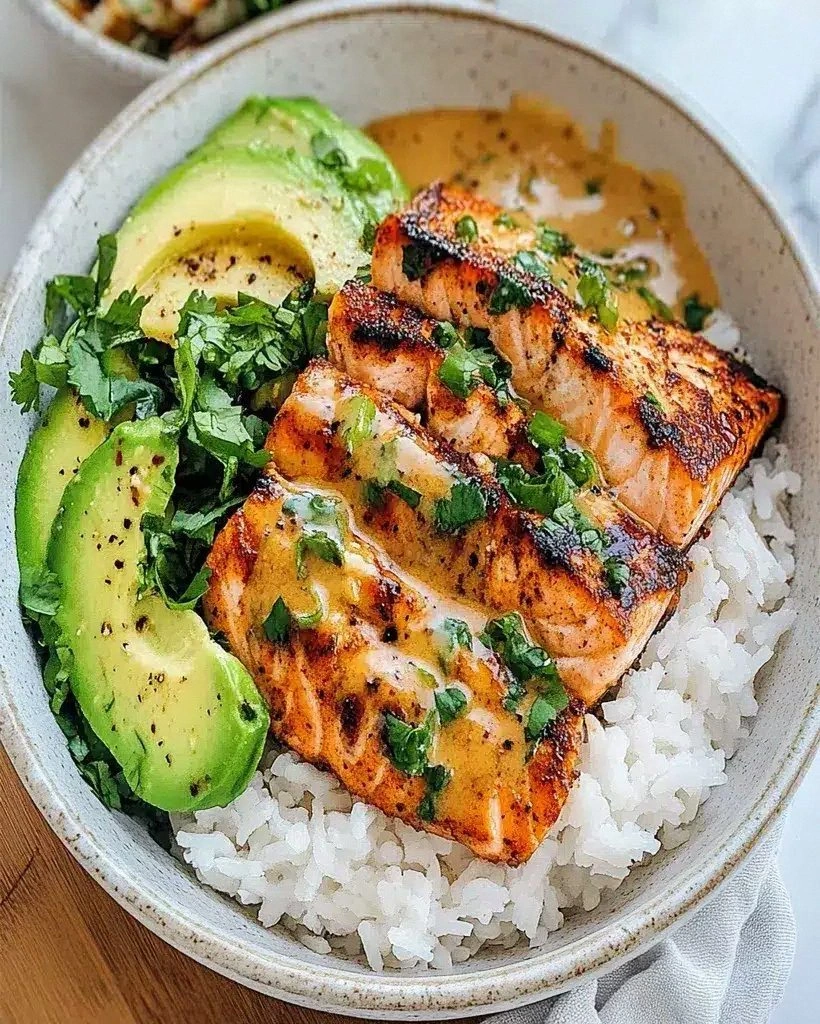
Let's talk about the finishing touches that separate amateur bowls from restaurant-quality ones. A sprinkle of furikake — that Japanese seasoning blend with seaweed and dried fish — adds incredible umami depth and a hit of ocean flavor that makes the salmon taste even more like itself. If you can't find furikake, a small sheet of nori cut into thin strips with scissors works beautifully and costs pennies. The contrast of colors is important too — bright orange salmon against white rice with green onions and black sesame seeds creates visual appeal that makes people think you know what you're doing even if you're winging it.
Finally, don't underestimate the power of a good lime wedge on the side. That final squeeze of fresh lime right before eating brightens everything up and ties all the flavors together in a way that pre-mixed lime juice just can't replicate. It's like the difference between instant coffee and freshly ground beans — technically the same thing, but worlds apart in terms of flavor impact. If you've ever wondered why restaurant food tastes better than home cooking, it's often these small finishing touches that make all the difference.
The Method — Step by Step
- Start with the rice because it needs time to do its thing while you prep everything else. In a medium saucepan, combine 1 cup of jasmine rice with 1 cup of full-fat coconut milk, 1 cup of water, and 1/2 teaspoon of salt. Bring it to a boil over medium-high heat, then reduce to low, cover, and let it simmer for 15 minutes. Here's the part most people mess up — don't peek! Every time you lift that lid, you're letting out steam that the rice needs to cook properly. When the timer goes off, remove it from heat and let it sit, still covered, for another 10 minutes. This is where the magic happens — the rice finishes cooking in its own steam and becomes perfectly fluffy.
- While the rice does its thing, let's prep the salmon. Pat those fillets dry with paper towels like your life depends on it — I mean really get in there and absorb every last bit of moisture. This is the difference between salmon that sears beautifully and salmon that steams into a sad, gray mess. Season both sides generously with salt and pepper, then let them sit at room temperature for about 10 minutes. Cold fish in a hot pan equals uneven cooking, and we're not about that life. The salt will start drawing out moisture, so give them one final pat-down right before they hit the pan.
- Okay, ready for the game-changer? Mix up your glaze by combining 2 tablespoons of sriracha, 1 tablespoon of honey, 1 tablespoon of lime juice, 1 tablespoon of soy sauce, and 1 teaspoon of sesame oil in a small bowl. Whisk it until it's smooth and glossy — it should coat the back of a spoon like velvet. Taste it and adjust the heat level if needed. If you're cooking for spice wimps, start with 1 tablespoon of sriracha and work your way up. This sauce is what makes people lick their bowls clean, so don't be shy with the sampling.
- Heat a large skillet over medium-high heat until it's screaming hot — a drop of water should dance across the surface like it's doing the cha-cha. Add 2 tablespoons of neutral oil (I use avocado oil for its high smoke point) and swirl to coat the pan. Carefully place the salmon fillets skin-side up and don't move them! Let them cook undisturbed for 4-5 minutes until the bottoms are golden and crispy. That sizzle when it hits the pan? Absolute perfection. If you've done your job right, they should release easily when they're ready to flip.
- Flip the salmon and immediately reduce the heat to medium. Cook for another 3-4 minutes, depending on the thickness of your fillets. Here's where most recipes get it wrong — they tell you to cook until the salmon flakes easily, but by then it's already overcooked. You want it to still be slightly translucent in the center when you remove it from the pan; it'll continue cooking from residual heat. The center should feel springy when pressed gently, not firm and definitely not mushy.
- Pour half of your glaze into the pan and tilt it so the sauce pools around the salmon. Use a spoon to baste the fillets with the glaze, letting it bubble and thicken slightly. This is the moment of truth — the sugars in the honey are caramelizing, the sriracha is infusing into every crevice, and your kitchen is starting to smell like you know what you're doing. After about a minute, flip the salmon once more to coat the other side, then transfer to a plate to rest. Don't skip this step! Resting allows the juices to redistribute, preventing them from running all over your cutting board.
- Add the remaining glaze to the same pan — don't wipe it out! Those browned bits are pure flavor gold. Add the remaining glaze along with 1 tablespoon of water to loosen it up, scraping up all the caramelized bits with a wooden spoon. Let it simmer for about 30 seconds until it thickens to a spoon-coating consistency. This is your final sauce for drizzling, and trust me, you'll want to put this stuff on everything.
- Time to build your bowls! Fluff the coconut rice with a fork — it should be individual grains that are creamy yet distinct, not a sticky mess. Divide it among four bowls and create a little well in the center. Place a salmon fillet on top of each mound of rice, then drizzle with that gorgeous glaze. Sprinkle with green onions, sesame seeds, and serve with lime wedges on the side. And now the fun part: break out your phone because you're going to want to document this beauty before you demolish it.
Insider Tricks for Flawless Results
The Temperature Rule Nobody Follows
Here's something that'll change your cooking game forever: room temperature salmon cooks more evenly than cold salmon straight from the fridge. I know, I know — everyone tells you to keep seafood cold until the last second, but they're wrong. When salmon is cold, the outside overcooks while the inside stays raw, leading to that disappointing gray band of overcooked fish around a raw center. Let your salmon sit out for 15-20 minutes before cooking, and you'll achieve that perfect edge-to-edge doneness that restaurant chefs make look so easy. A friend tried skipping this step once — let's just say it didn't end well, and we ended up ordering takeout anyway.
But here's the real secret: use a thermometer! I know it feels fussy, but pulling your salmon at 125°F for medium-rare or 130°F for medium will guarantee perfect results every time. The FDA might clutch their pearls, but these temperatures are safe for salmon and result in fish that's silky and moist instead of chalky and dry. If you've ever wondered how restaurants serve salmon that's still pink in the center without killing anyone, this is how.
Why Your Nose Knows Best
Your nose is your most underutilized cooking tool, especially when it comes to this recipe. When the coconut rice is perfectly cooked, it should smell like a tropical paradise — sweet and fragrant without being overpowering. If you can't smell anything, it needs more time. If it smells toasted or nutty, you've gone too far and it's starting to scorch on the bottom. The same goes for the glaze — when the honey starts to caramelize, you'll smell it before you see it. It should smell like sweet candy with a spicy kick, not like burnt sugar.
Another nose trick: when your pan is properly heated for searing, you should smell the oil just starting to shimmer and heat up, but it shouldn't smell acrid or burnt. Different oils have different smoke points, and knowing when they're ready is key. Avocado oil has a neutral scent when hot, while sesame oil will smell nutty and aromatic. Trust your nose — it knows when things are going right or when you're about to set off every smoke alarm in your building.
The 5-Minute Rest That Changes Everything
This next part? Pure magic. After you cook the salmon, let it rest for exactly 5 minutes before serving. I know you're hungry and the smell is driving you crazy, but this rest is what separates amateur cooks from the pros. During this time, the proteins relax and reabsorb their juices, meaning when you cut into that salmon, it stays moist instead of flooding your plate with fish juice that should have stayed inside. The internal temperature also rises slightly during resting, so if you pulled it at 125°F, it'll coast up to a perfect 130°F.
While the salmon rests, this is your opportunity to finish the sauce and prep your garnishes. The timing works perfectly — by the time you've scraped up all those beautiful browned bits and reduced the glaze to the perfect consistency, your salmon is ready to be served. This is also when you should fluff your rice and get everything plated. Think of it as the calm before the storm, right before you dig in and make inappropriate noises while eating.
The Pat-Dry Technique That Transforms Everything
Listen up, because this is the tip that'll make you look like you went to culinary school. Before seasoning your salmon, pat it dry with paper towels until they're completely saturated, then pat it dry again with fresh towels. I'm talking about removing every last molecule of surface moisture. Why? Because water creates steam, and steam prevents browning. You want that beautiful Maillard reaction that creates the complex, nutty flavors and gorgeous golden crust that makes people think you know secrets they don't.
But here's the part that'll really blow your mind: after you pat it dry, let it sit uncovered in the fridge for 30 minutes. This air-drying technique removes even more moisture from the surface, resulting in the crispiest skin and best seared exterior you've ever achieved. The salt you added will draw out more moisture, which you'll pat off again before cooking. Yes, it's an extra step, but the difference is night and day. Picture yourself pulling this out of the oven, the whole kitchen smelling incredible, with salmon that has a crust so perfect it could win awards.
Creative Twists and Variations
This recipe is a playground. Here are some of my favorite ways to switch things up:
The Tropical Vacation
Transform your bowl into a Caribbean getaway by adding diced mango, fresh cilantro, and a squeeze of orange juice to the coconut rice. Replace the sriracha with Caribbean hot sauce (like Pickapeppa or Matouk's) and add a sprinkle of toasted coconut flakes on top. The sweetness of the mango plays beautifully with the spicy salmon, and you'll feel like you're eating on a beach somewhere instead of your kitchen table. This version is particularly good in the summer when mangoes are at their peak and you want something that tastes like sunshine.
The Korean Fire Bowl
For those who like to live dangerously, swap the sriracha for gochujang (Korean chili paste) and add a tablespoon of rice wine vinegar to the glaze. Top your bowl with kimchi, julienned Korean pear for crunch and sweetness, and a fried egg with a runny yolk that becomes its own sauce. Sprinkle with Korean chili flakes (gochugaru) for extra heat and color. The combination of fermented kimchi and spicy salmon creates this umami bomb that's absolutely addictive, and the pear provides this refreshing contrast that keeps you going back for more.
The Mediterranean Mashup
This might sound crazy, but hear me out — replace the coconut milk with Greek yogurt when making the rice, and add lemon zest and fresh dill. Swap the sriracha glaze for a harissa-based sauce, and top with diced cucumber, cherry tomatoes, and a sprinkle of feta cheese. The cooling yogurt rice balances the spicy harissa salmon perfectly, and the fresh vegetables add crunch and brightness. It's like taking your taste buds on a trip from Bangkok to Santorini in one bowl.
The Vegan Powerhouse
You can absolutely make this plant-based by substituting firm tofu for the salmon. Press the tofu for 30 minutes to remove excess moisture, then cube it and toss with cornstarch before pan-frying until crispy on all sides. The glaze works exactly the same way, creating sticky, caramelized cubes of protein that are just as satisfying as salmon. For extra nutrition, add edamame to the rice and top with avocado slices. Even dedicated meat-eaters have asked me for this recipe after trying it.
The Breakfast for Dinner
Turn this into a breakfast bowl by adding a soft-boiled egg, swapping the coconut rice for coconut grits (just replace rice with stone-ground grits), and adding some crispy bacon or pancetta. The runny yolk mixes with the spicy glaze to create this incredible sauce, and the smoky bacon adds another layer of flavor. It's comfort food at its finest, perfect for those nights when you want breakfast but it's socially unacceptable to eat pancakes for dinner.
The Low-Carb Lightning
For my keto friends, replace the rice with cauliflower rice sautéed in coconut oil with a splash of coconut milk for flavor. Add some diced bell peppers and zucchini to bulk it up, and you've got all the flavors of the original without the carbs. The key is cooking the cauliflower rice until it's just tender but still has some bite — nobody wants mushy vegetables masquerading as rice. Top with some sliced avocado for healthy fats and you've got a bowl that fits your macros and still satisfies.
Storing and Bringing It Back to Life
Fridge Storage
Here's the thing about these bowls — they actually get better after a day in the fridge when the flavors have had time to meld and get to know each other. Store the components separately for best results: rice in one container, salmon in another, and sauce in a small jar. The rice will keep for up to 4 days, the salmon for 2-3 days, and the sauce for up to a week. If you've already assembled the bowls, they'll keep for 2 days, but the rice might get a bit dry and the salmon won't have that beautiful texture you worked so hard to achieve.
Always let everything cool completely before storing — putting hot food in the fridge creates condensation that makes everything soggy and can lead to bacterial growth. Divide into shallow containers so everything cools faster and evenly. And here's a pro tip: store a piece of plastic wrap directly on the surface of the rice to prevent it from drying out and forming that hard, unappetizing crust that nobody wants to eat.
Freezer Friendly
Good news for meal preppers — the salmon and rice freeze beautifully! Portion the cooled rice into freezer bags, squeeze out all the air, and lay flat to freeze. It'll keep for up to 3 months and thaws in about 30 minutes on the counter. The salmon should be wrapped tightly in plastic wrap, then foil, and can be frozen for up to 2 months. The sauce doesn't freeze well due to the honey — it gets grainy and separates when thawed, so just make a fresh batch when you're ready to reheat.
For best results, thaw everything overnight in the fridge rather than using the microwave. If you're in a hurry, you can thaw the rice in the microwave with a splash of water to rehydrate it, but the salmon really benefits from a slow thaw to maintain its texture. Once thawed, use within 24 hours for best quality and safety.
Best Reheating Method
Reheating salmon is where most people go wrong and end up with dry, sad fish that tastes like punishment. The key is low and slow — reheat in a 275°F oven for about 10-12 minutes, covered with foil to prevent drying out. Add a tiny splash of water before reheating — it steams back to perfection. The rice can be reheated in the microwave with a damp paper towel over the top, or better yet, steam it in a covered pot with a tablespoon of water for about 5 minutes.
If you're reheating in the microwave, do it in 30-second bursts, stirring between each burst to prevent hot spots. And whatever you do, don't overheat the salmon — it's better to serve it slightly warm than piping hot, which guarantees overcooking. The sauce can be gently warmed in the microwave for 10-15 seconds or just served at room temperature — it doesn't need to be hot to taste amazing.