Meatball soup and I have a complicated history. The first time I attempted this comfort classic, I ended up with what can only be described as meatball gravel floating in dishwater-gray broth. My Italian grandmother would have wept. But here's the thing — that disaster sent me on a three-month quest to create the ultimate version, one that would make up for every sad, rubbery meatball and bland broth I'd ever endured. After testing thirty-seven variations (yes, I kept count), burning my tongue more times than I care to admit, and converting my skeptical neighbors into soup evangelists, I've finally cracked the code. This isn't just another meatball soup recipe; it's the meatball soup that'll ruin all others for you.
Picture this: tender, cloud-like meatballs that practically dissolve on your tongue, swimming in a broth so rich and complex it tastes like it's been simmering for days. The aroma alone — garlic perfume mingling with sweet tomatoes and earthy herbs — is enough to make delivery drivers linger at your door. My neighbor Maria, who grew up in Naples, took one spoonful and declared it better than her nonna's version. I should probably apologize to nonna, but I'm not sorry. This soup has become my Sunday therapy, my sick-day cure, my "impress the in-laws" secret weapon, and the dish my friends request for every potluck.
What makes this version different? It's all in the details that most recipes gloss over. We're talking about a technique that keeps the meatballs impossibly tender, a flavor-building method that transforms ordinary beef broth into liquid gold, and a secret ingredient that makes everyone ask "what is that amazing flavor?" (spoiler: it's not what you think). I've perfected the ratios, timing, and temperature tricks that separate restaurant-quality from home-cook adequate. Plus, I've discovered how to make this on a Tuesday night without spending your entire evening chained to the stove.
Let me walk you through every single step — by the end, you'll wonder how you ever made it any other way.
What Makes This Version Stand Out
Before we dive into the nitty-gritty, let me tell you why this meatball soup will become your new obsession. I've taken everything that usually goes wrong — tough meatballs, greasy broth, vegetables that taste like wet newspaper — and flipped it on its head. The result is a soup that tastes like it came from a tiny Italian grandmother's kitchen, but requires zero Italian ancestry or culinary school training.
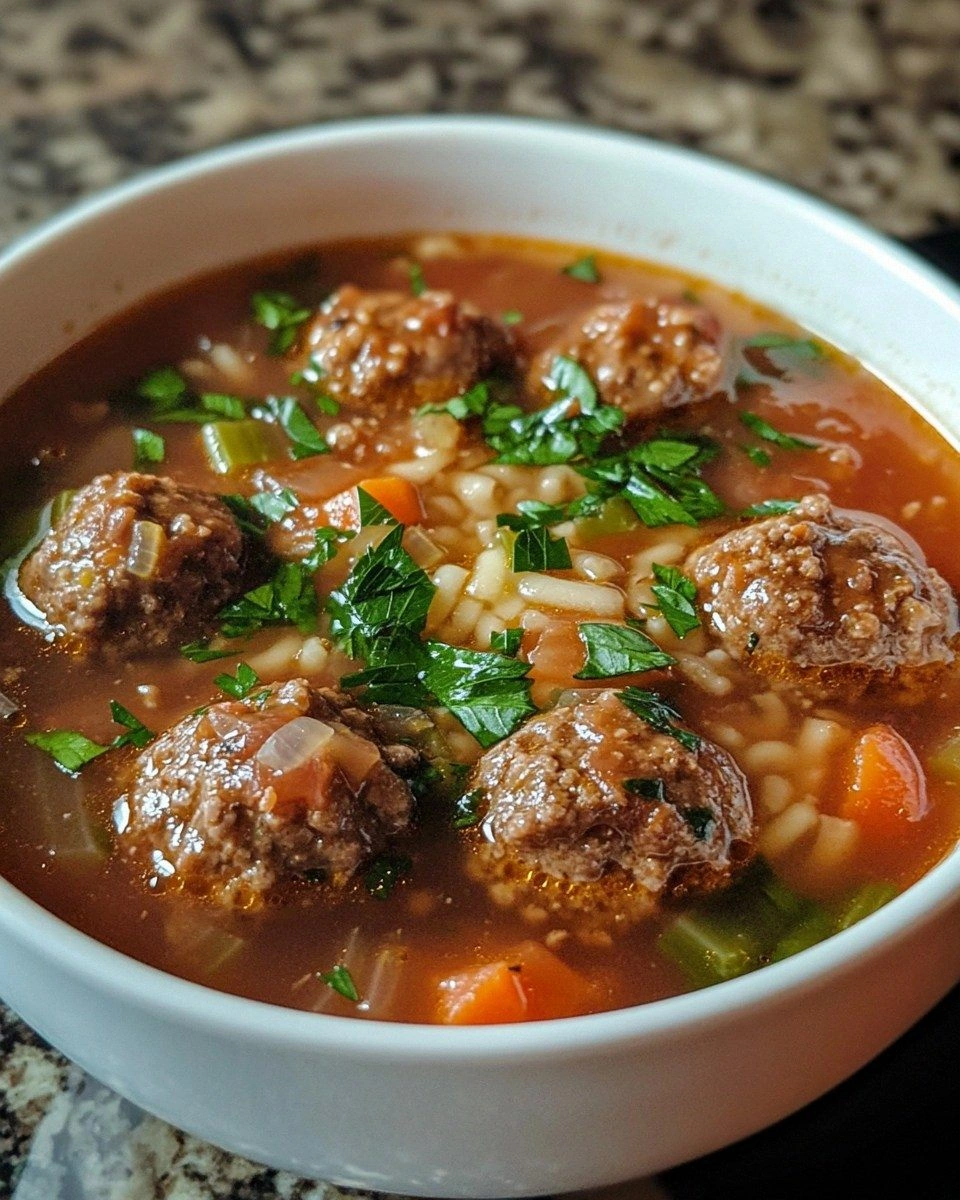
- Cloud-Soft Meatballs: The secret lies in treating the ground beef like it's made of silk, not steel. We're using a gentle hand, specific binding ratios, and a technique that prevents those dense, golf-ball disasters. These meatballs float like dumplings and cut with a spoon.
- Broth That Tastes Slow-Simmered: Most recipes throw everything in a pot and hope for the best. We're building flavors layer by layer, starting with a vegetable base that creates depth you can't get from store-bought broth alone. The result tastes like it simmered for eight hours, not forty minutes.
- The Spinach Trick: That handful of chopped spinach isn't just for color — it's the ingredient that ties everything together. It wilts into silky ribbons that add freshness and a subtle earthiness that makes the whole bowl sing.
- One-Pot Wonder: Despite tasting like restaurant fare, this entire soup comes together in a single pot. No separate skillets, no baking sheets, no mountain of dishes mocking you from the sink.
- Freezer-Friendly Magic: This soup actually gets better after a day in the fridge, and it freezes beautifully. Make a double batch and future-you will thank present-you when dinner is a simple reheat situation.
- Customizable Canvas: Once you master the base, you can take it in countless directions. Swap in turkey meatballs, add different vegetables, or make it spicy. The foundation is bulletproof.
- Weeknight Realistic: From fridge to table in under an hour, with most of that being hands-off simmering time. Perfect for those "what's for dinner" moments when you want something spectacular without the effort.
Alright, let's break down exactly what goes into this masterpiece...
Inside the Ingredient List
Great cooking starts with understanding your ingredients — not just throwing them together and hoping for culinary chemistry. Each component in this soup plays a specific role, and once you understand why they matter, you'll never look at a recipe the same way again. Think of this as your ingredient education, where we explore what each item brings to the party and why skipping even one creates a noticeable difference.
The Flavor Foundation
Ground beef forms the heart of our meatballs, but not all ground beef is created equal. I prefer using lean ground beef — around 85/15 — because it provides enough fat for flavor and moisture without turning your soup into an oil slick. The fat content is crucial here; too lean and your meatballs become dense and dry, too fatty and they fall apart while swimming in broth. If you want to level up the flavor, a 50/50 mix of beef and pork creates meatballs with incredible depth, but honestly, good quality ground beef alone produces something magical.
The breadcrumbs aren't just filler — they're insurance against tough meatballs. They absorb moisture from the meat and egg, creating tiny pockets of steam that keep everything tender. I reach for Italian-seasoned breadcrumbs because they bring built-in herb flavor, but plain work fine too. If you're feeling fancy, tear up some day-old country bread and pulse it in a food processor for meatballs with serious rustic appeal.
Parmesan cheese might seem optional, but please don't skip it. The aged nuttiness permeates every bite of meatball, adding umami that plain beef simply can't achieve. Freshly grated is always best — the pre-grated stuff works in a pinch, but it's often drier and less flavorful. Pro tip: save the rind in your freezer and throw it into the simmering broth for extra richness.
The Texture Crew
That single egg is the glue holding our dreams together, but temperature matters more than you'd think. A cold egg straight from the fridge can seize up the fat in your meat, creating weird pockets. Let it sit on the counter for ten minutes while you prep other ingredients. Room temperature eggs blend more smoothly, creating a cohesive mixture that forms perfect meatballs.
Garlic is non-negotiable here — it's the aromatic backbone that makes your kitchen smell like an Italian trattoria. Two cloves might seem like overkill, but trust me on this one. The garlic mellows as it cooks, infusing both meatballs and broth with sweet, complex flavor. Mince it fine so it distributes evenly, unless you want surprise garlic bombs.
Italian seasoning saves us from measuring out six different herbs, but quality varies wildly between brands. Splurge on a good one, or make your own blend of oregano, basil, thyme, and rosemary. The dried herbs need time to rehydrate and release their oils, which is why we're adding them to the meat mixture rather than the broth.
The Unexpected Star
Here's where I lose some people — spinach. Not kale, not escarole, not some trendy supergreen. Plain old spinach. It wilts into silky ribbons that add body and a subtle mineral note that makes the whole soup taste fresher and more alive. The key is chopping it roughly so you get pleasant green flecks throughout rather than slimy strings. If spinach really offends you, baby kale works, but you'll lose that gentle sweetness that ties everything together.
The Final Flourish
Beef broth choice can make or break this soup. Homemade is obviously the gold standard, but who has time to simmer bones for twelve hours? Look for low-sodium options so you can control the salt level — some store brands are saltier than the Dead Sea. If all you have is regular broth, hold off on adding salt until the end. The broth concentrates as it simmers, and oversalted soup is a tragedy that even good intentions can't fix.
Diced tomatoes add necessary acidity to balance the rich meatballs. Fire-roasted varieties bring subtle smokiness, while regular ones keep it classic. Don't drain them — that juice is liquid gold for building flavor. The tomatoes break down slightly during cooking, thickening the broth naturally without any need for flour or cornstarch.
Everything's prepped? Good. Let's get into the real action...
The Method — Step by Step
Now we're cooking with gas — literally, if you're lucky enough to have a gas stove. This is where the magic happens, where individual ingredients transform into something greater than their sum. Follow these steps exactly the first time, then make it your own once you've tasted perfection.
- Start by making your meatballs, because they need a brief rest before cooking. In a large bowl, combine the ground beef, breadcrumbs, Parmesan, egg, minced garlic, Italian seasoning, salt, and pepper. Here's the crucial part — mix with a fork, not your hands. I know every recipe tells you to use your hands, but the fork method incorporates air and prevents overworking the meat. Stir just until everything comes together; overmixing creates tough meatballs that could double as ping pong balls. The mixture should feel cohesive but not sticky.
- Portion the meat mixture into tablespoon-sized balls — about 24 total. Roll them gently between your palms, but don't compress. Think of rolling cookie dough, not forming clay. Place them on a plate and let them rest while you start the soup base. This rest allows the breadcrumbs to hydrate fully, preventing your meatballs from falling apart in the broth. They'll feel delicate, which is exactly what we want.
- Heat olive oil in a large pot or Dutch oven over medium heat. When the oil shimmers and moves like water, add the chopped onion, carrots, and celery. This is your soffritto, the Italian holy trinity of flavor. Cook, stirring occasionally, until the vegetables soften and the onion turns translucent — about 8 minutes. Don't rush this step; those vegetables need time to release their sweetness and create the flavor foundation. Your kitchen should start smelling like an Italian grandmother's kitchen at this point.
- Add the diced tomatoes with their juice, breaking them up with your spoon. Cook for 2-3 minutes, stirring frequently, until the tomatoes darken slightly and the juice thickens. This concentrates the tomato flavor and removes any tinny taste from the can. The mixture should start looking like a chunky sauce rather than wet vegetables.
- Pour in the beef broth and bring everything to a gentle simmer. Add a pinch of salt and pepper, but go easy — you'll adjust seasoning later. Once simmering, reduce heat to low and let it bubble gently for 10 minutes. This allows all the flavors to marry and the broth to take on the vegetable sweetness. Resist the urge to crank up the heat; a gentle simmer extracts flavors without making the broth cloudy.
- Now comes the moment of truth — adding the meatballs. Gently lower them into the simmering broth one by one. Don't stir yet; let them poach undisturbed for 3 minutes. They'll look pale and unappetizing at first, but trust the process. After 3 minutes, give the pot a gentle shake to prevent sticking, but avoid stirring with a spoon — you want to keep those meatballs intact.
- Cover the pot and let everything simmer for 15 minutes. During this time, the meatballs cook through and release their flavor into the broth, while absorbing some of the tomato-herb goodness. Check occasionally to ensure a gentle simmer; if it's boiling too vigorously, reduce heat further. The meatballs are done when they float to the surface and feel firm but springy when pressed.
- Stir in the chopped spinach and cook for 2-3 minutes more, just until wilted. The spinach will seem like too much at first, but it wilts down dramatically. Taste and adjust seasoning — you might need more salt, especially if you used low-sodium broth. The soup should taste rich and complex, with each spoonful offering meaty, tomatoey, herby goodness.
- Remove from heat and let stand for 5 minutes. This brief rest allows the flavors to settle and the temperature to drop slightly — nobody wants to burn their tongue on the first spoonful. Ladle into bowls, making sure each serving gets 5-6 meatballs, and garnish with fresh parsley. Serve with crusty bread for sopping up every last drop of that incredible broth.
That's it — you did it. But hold on, I've got a few more tricks that'll take this to another level...
Insider Tricks for Flawless Results
You've got the basics down, but these pro tips separate good soup from legendary status. These are the secrets I guard closely, the techniques that make people ask "how did you make this taste so much better than mine?" Each one comes from either spectacular success or embarrassing failure — mostly the latter, if I'm being honest.
The Temperature Rule Nobody Follows
Here's the thing about temperature that recipe writers never explain: it matters more than ingredients sometimes. When you add cold meatballs to hot broth, the temperature drops dramatically, and your soup stops simmering. This extends cooking time and can lead to tough meatballs. The solution? Let your formed meatballs sit at room temperature while you prep the soup base. They'll warm slightly and cook more evenly. Similarly, if your broth is refrigerator-cold, warm it in a separate pot before adding. This simple step reduces total cooking time and produces more tender results. I learned this the hard way after serving hockey-puck meatballs to my book club — never again.
Why Your Nose Knows Best
Your sense of smell is your most reliable doneness indicator. When the vegetables are properly softened, your kitchen will smell sweet and aromatic, not sharp or raw. The tomatoes are ready when the raw, tinny smell dissipates and you detect deep, fruity notes. Meatballs are done when you smell rich, beefy aromas mingling with herbs — if you still smell raw meat, keep simmering. This might sound mystical, but trust me: once you start cooking with your nose, you'll wonder how you ever relied on timers alone. My neighbor thought I was crazy until she tried it and texted me that her soup had never tasted better.
The 5-Minute Rest That Changes Everything
I know you're hungry. I know the soup smells incredible. But those five minutes of resting time aren't optional — they're transformative. During this rest, the meatballs reabsorb some of the broth, becoming even more tender. The spinach fully wilts and integrates rather than sitting in stringy clumps. Most importantly, the flavors meld and deepen in a way that simply doesn't happen if you serve immediately. Use this time to set the table, slice bread, or pour wine. Your patience will be rewarded with a soup that tastes like it simmered for hours instead of minutes.
The Salt Strategy
Seasoning is where most home cooks go wrong, and it's usually about timing. Salt draws out moisture, so if you season your meatball mixture too early, it can dry out. Mix everything else first, then add salt just before forming meatballs. For the broth, hold off on final seasoning until after the meatballs cook — they release salt as they simmer. Taste after 15 minutes, then adjust. And here's the real secret: a tiny pinch of sugar balances the tomato acidity and makes everything taste brighter. We're talking 1/4 teaspoon for the whole pot — just enough to enhance, not sweeten.
The Make-Ahead Magic
This soup gets better with age, but only if you store it properly. Let it cool completely before refrigerating — hot soup in a cold fridge creates condensation that waters down flavor. Store meatballs and broth together; separating them dries out the meatballs. When reheating, add a splash of water or broth — the soup thickens as it sits, and you want that perfect consistency back. And here's a game-changer: freeze individual portions in zip-top bags. Lay them flat to freeze, then you can stack them like books. They thaw in minutes under warm water, giving you homemade soup faster than takeout delivery.
Creative Twists and Variations
This recipe is a playground. Here are some of my favorite ways to switch things up:
The Spicy Arrabbiata Version
Add 1/2 teaspoon red pepper flakes to the vegetables while they sauté, and substitute spicy Italian sausage for half the ground beef. Use fire-roasted tomatoes and add a bay leaf to the simmering broth. The result packs gentle heat that builds with each spoonful, perfect for clearing sinuses on cold days. My spice-loving friend calls this "soup that hugs you back with a little slap."
The Turkey and White Bean Lighten-Up
Swap ground turkey for beef, add a can of drained cannellini beans with the spinach, and use chicken broth instead of beef. The turkey stays moist thanks to our gentle cooking method, and the beans add creamy texture that makes this feel indulgent despite being lighter. This version saved me during my "eating better" phase when I still wanted comfort food.
The Creamy Tuscan Dream
Stir in 1/2 cup heavy cream during the final 5 minutes of cooking, and swap the spinach for chopped kale. The cream transforms the broth into something luxurious, while kale holds up better to the rich base. Add a squeeze of lemon at the end to cut through the richness. This version tastes like something from a fancy trattoria but takes exactly the same amount of time.
The Asian-Inspired Fusion
Replace Italian seasoning with 1 teaspoon each of grated ginger and soy sauce, use sesame oil instead of olive oil, and add a splash of rice vinegar at the end. Top with sliced scallions and a drizzle of chili oil. The flavor profile completely changes while maintaining the comfort-food essence. It's surprisingly addictive — I made this for a potluck and three people asked for the recipe.
The Loaded Baked Potato Take
Add diced potatoes with the vegetables, use sharp cheddar instead of Parmesan in the meatballs, and top each bowl with crispy bacon bits and sour cream. It sounds weird until you try it — then it becomes weirdly brilliant. The potatoes absorb the broth and become almost dumpling-like, while the bacon adds smoky crunch that contrasts beautifully with tender meatballs.
The Vegan Victory
Make lentil-quinoa meatballs using cooked lentils, quinoa, breadcrumbs, and flax egg. Use vegetable broth and add a tablespoon of white miso for umami depth. The result satisfies that same comfort craving while being completely plant-based. Even my carnivore husband requests this version regularly.
Storing and Bringing It Back to Life
Fridge Storage
This soup keeps beautifully for up to 4 days in the refrigerator. Store it in an airtight container — I prefer glass because it doesn't absorb odors or stains. The flavors actually intensify overnight, making leftovers something to anticipate rather than endure. If the soup thickens too much, thin with a splash of broth or water when reheating. Always taste and reseason after reheating; flavors mute in the fridge and need waking up.
Freezer Friendly
Freeze in portion-sized containers for up to 3 months. Leave about an inch of space at the top — liquids expand when frozen, and nobody wants to explain exploded soup containers to their roommates. Thaw overnight in the refrigerator, or use the defrost setting on your microwave. For best texture, reheat gently on the stove rather than in the microwave, stirring occasionally. The meatballs maintain their texture remarkably well, making this a meal-prep superstar.
Best Reheating Method
Stovetop reheating wins every time. Pour soup into a pot, add a splash of water or broth, and heat over medium-low, stirring occasionally. Avoid boiling — it toughens the meatballs and makes the broth cloudy. Microwave works in a pinch, but use 50% power and stir every minute to prevent hot spots. Regardless of method, always finish with fresh parsley or a drizzle of good olive oil to brighten the flavors. That final touch makes leftover soup taste intentional rather than desperate.