I remember the night the kitchen turned into a battlefield: the skillet had been over‑heated, the sauce had thickened into a stubborn crust, and I was left staring at a ruined casserole that looked more like a casserole of regret than comfort food. I tried to salvage it, but the flavor was flat, the texture clumpy, and the aroma was more “burnt” than “toasty.” That disaster became the spark that lit my culinary curiosity and forced me to ask: what if the classic creamy chicken and rice casserole could be transformed into a dish that sings from the first bite to the last crumb? I’m talking about a version that marries silky sauce, tender chicken, fluffy rice, and a golden breadcrumb topping that crackles like applause. If you’re tired of the same old casserole that comes out bland and mushy, stay with me—because I’m about to walk you through a recipe that will change the way you think about comfort food forever.
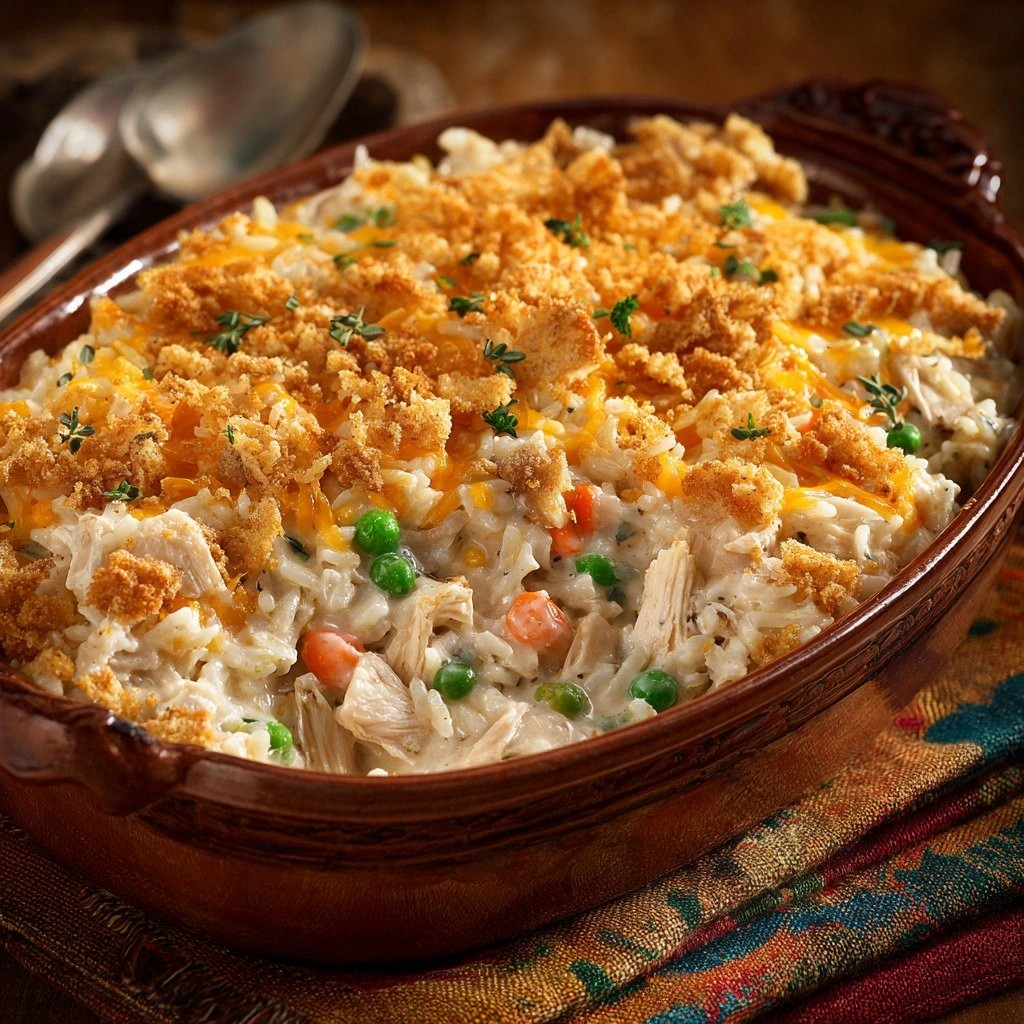
Picture this: a pot of chicken broth bubbling gently, the scent of garlic and onion filling the kitchen, a swirl of milk and cream turning the mixture into a glossy, velvety sauce that coats every grain of rice like a silky blanket. The chicken, perfectly browned, releases a savory aroma that makes your mouth water before you even taste it. The carrots and celery add a subtle crunch, and the peas give a pop of color that feels like a secret garden in a bowl. When you lift the casserole from the oven, the breadcrumb topping is a golden crown that crackles when you bite into it, and the Parmesan cheese melts into a creamy, nutty finish that lingers on your tongue. That’s the kind of sensory experience I’m talking about—rich, layered, and utterly comforting. I dare you to taste this and not go back for seconds.
What makes this version stand out is not just the ingredients, but the technique. I’ve refined the sauce to the point where it’s light enough to let the rice shine yet thick enough to cling to each grain. The chicken is seared to lock in juices, then finished in the sauce so it never dries out. I’ve added a splash of lemon zest for a bright counterpoint that cuts through the richness, and I’ve used a blend of thyme and paprika to give depth without overpowering. The breadcrumb topping is toasted in butter so it’s crisp on the outside but tender inside, and the Parmesan adds a savory umami punch. Every element is carefully balanced so that no single component overwhelms the others. If you’ve ever struggled with a casserole that falls flat, you’re not alone—and I’ve got the fix.
And the best part? This casserole can be made ahead of time and baked right before serving, making it the perfect dish for weeknight dinners or entertaining guests. The flavors only deepen as it sits, so you’ll come home to a meal that’s even better the next day. Picture yourself pulling this out of the oven, the whole kitchen smelling incredible, and the family gathering around the table, eager to dive into the creamy, comforting goodness. The anticipation alone is worth the effort, and I promise you that by the end of this guide, you’ll wonder how you ever made it any other way.
What Makes This Version Stand Out
- Flavor: The sauce is a harmonious blend of creamy, savory, and slightly citrusy notes that elevate every bite.
- Texture: Fluffy rice, tender chicken, and a crisp breadcrumb topping create a contrast that feels like a dance on your palate.
- Simple Prep: With minimal steps and no complicated techniques, you can whip up this dish in under an hour.
- Unique Twist: A splash of lemon zest and a hint of paprika add a fresh kick that sets it apart from standard casseroles.
- Crowd‑Pleaser: Whether it’s a family dinner or a potluck, this casserole delivers a crowd‑satisfying, comforting meal.
- Ingredient Quality: Using fresh chicken, high‑quality Parmesan, and real butter makes a noticeable difference in flavor.
- Cooking Method: Searing the chicken first locks in moisture, while slow‑cooking the sauce ensures a silky finish.
- Make‑Ahead: The dish can be assembled the night before and baked right before serving, saving you time on busy evenings.
Alright, let’s break down exactly what goes into this masterpiece…
Inside the Ingredient List
The Flavor Base
The foundation of this casserole is the broth and milk combination. Chicken broth provides depth and savory undertones, while whole milk adds creaminess without making the dish overly heavy. If you prefer a richer sauce, swap the milk for half‑and‑half or even a splash of heavy cream. Skipping the broth will result in a flat sauce that lacks the complex flavor profile that keeps people coming back for more.
Buying tip: Look for low‑sodium broth if you’re watching your salt intake. A 32‑ounce bottle of good quality broth will give you plenty of room for seasoning adjustments. If you can’t find a brand you like, a homemade broth made from simmered chicken bones will elevate the dish even further.
The Texture Crew
Rice is the star of the show, and the type you choose matters. Long‑grain white rice absorbs the sauce beautifully while staying fluffy. If you’re in the mood for a twist, try arborio rice for a more risotto‑like texture, or brown rice for a nutty bite. Remember, the rice should be partially cooked before adding it to the casserole; otherwise, it will become mushy.
Carrots, celery, and peas add a burst of color and a gentle crunch that contrast with the creamy sauce. Dice the carrots and celery into small cubes so they cook evenly and blend seamlessly into the dish. If you prefer a vegetable‑free version, simply omit these ingredients without compromising the overall flavor.
The Unexpected Star
Breadcrumbs are not just a topping; they’re a textural revelation. Toasted in butter, they create a golden, crunchy layer that contrasts with the silky sauce. For a gluten‑free option, use almond flour or crushed pork rinds. If you want a more decadent topping, mix in grated Parmesan before baking.
Parmesan cheese brings a nutty, umami punch that elevates the entire dish. Grated finely so it melts evenly, it also helps to thicken the sauce slightly, giving it that velvety feel. Skipping the cheese will make the casserole less complex, but it won’t ruin the dish; it just won’t have that extra layer of flavor.
The Final Flourish
Lemon zest is the secret weapon that cuts through the richness and adds a bright, citrusy note. It’s subtle yet transformative, giving the casserole a fresh lift that makes it feel lighter. If you’re not a fan of lemon, you can substitute a splash of white wine or a pinch of vinegar for a similar acidity.
Fresh thyme and paprika bring warmth and depth. Thyme’s earthy tones complement the chicken, while paprika adds a gentle smokiness that ties the dish together. If you don’t have fresh thyme, dried thyme works fine, but use only half the amount to avoid bitterness.
Everything’s prepped? Good. Let’s get into the real action…
The Method — Step by Step
- Prep the Oven and Pan: Preheat your oven to 375°F (190°C). Grease a 9x13 inch baking dish with butter or cooking spray. The dish should be ready for the casserole to slide in without sticking, and the butter will add a subtle flavor to the base.
- Seared Chicken: Heat 2 tablespoons of olive oil in a large skillet over medium‑high heat. Season the chicken breasts with salt, pepper, and a pinch of paprika. Once the oil shimmers, add the chicken and sear for 3–4 minutes on each side until golden brown. This step locks in moisture and gives the chicken a savory crust.
- Sauté Veggies: In the same skillet, add 2 tablespoons of butter. Once melted, toss in the chopped onion, minced garlic, diced carrots, and diced celery. Cook for 5 minutes until the vegetables soften and the onions become translucent, releasing their natural sweetness.
- Deglaze and Simmer: Pour in 1 cup of chicken broth to deglaze the pan, scraping up any browned bits. Bring the mixture to a gentle simmer for 2 minutes, allowing the flavors to meld. This liquid will become the base of your sauce.
- Combine Rice and Chicken: Stir in the partially cooked rice, ensuring it’s evenly coated with the broth. Add the seared chicken on top, then pour 1 cup of whole milk and ½ cup of heavy cream over the mixture. The milk and cream will create that silky, velvety sauce that coats every grain.
- Add Seasonings: Sprinkle in 1 teaspoon of fresh thyme leaves, 1 teaspoon of paprika, 1 teaspoon of salt, and 1 teaspoon of black pepper. Stir gently to distribute the seasonings. If you like a hint of citrus, add 1 teaspoon of lemon zest now.
- Top and Bake: Sprinkle 1 cup of grated Parmesan over the casserole, followed by ½ cup of breadcrumbs. Dot the top with 3 tablespoons of melted butter to help the breadcrumbs crisp up. Place the dish in the oven and bake for 25–30 minutes, or until the top is golden brown and the sauce is bubbling.
- Final Touches: Once out of the oven, let the casserole rest for 5 minutes. This allows the sauce to thicken slightly and the flavors to settle. Serve hot with a sprinkle of fresh parsley or additional grated cheese if desired.
That’s it— you did it. But hold on, I’ve got a few more tricks that will take this to another level. Trust me, these small adjustments will make your casserole the talk of the table.
Insider Tricks for Flawless Results
The Temperature Rule Nobody Follows
Many people bake casseroles at too high a temperature, which can cause the top to brown too quickly while the inside remains undercooked. I always set the oven to 375°F (190°C) and check the casserole after 20 minutes. If the top is browning fast, reduce the heat to 350°F (175°C) for the remainder of the bake. This ensures even cooking and a perfectly golden crust.
Why Your Nose Knows Best
Your sense of smell is your best ally when cooking. As the casserole bakes, you’ll notice the aroma of toasted breadcrumbs and melting cheese. If the smell becomes overly buttery or burnt, lower the oven temperature or cover the dish loosely with foil. A quick sniff can save you from a ruined dish.
The 5‑Minute Rest That Changes Everything
Letting the casserole rest for five minutes after it comes out of the oven might seem like a waste of time, but it actually does wonders. The rest period allows the sauce to thicken and the flavors to meld. It also gives the breadcrumb topping a chance to set, so it doesn’t crumble when you cut into it.
Use a Cast‑Iron Skillet for Extra Flavor
Searing the chicken and sautéing the vegetables in a cast‑iron skillet adds a subtle smoky flavor that’s hard to replicate with other cookware. The skillet retains heat better, ensuring a more even sear and a richer sauce. If you don’t have cast iron, a heavy‑bottomed stainless steel pan works well too.
Add a Splash of White Wine
A tablespoon of dry white wine added to the broth before simmering adds acidity and depth. The alcohol evaporates during cooking, leaving behind a subtle, bright flavor that balances the richness of the cream. If you’re avoiding alcohol, a splash of apple cider vinegar can achieve a similar effect.
Creative Twists and Variations
This recipe is a playground. Here are some of my favorite ways to switch things up:
Cheesy Broccoli Delight
Swap the peas for a cup of steamed broccoli florets and add 1 cup of shredded cheddar cheese. The broccoli adds a fresh, slightly bitter contrast, while the cheddar brings a sharp, gooey texture.
Mediterranean Fusion
Replace the thyme with oregano, add a handful of sun‑dried tomatoes, and sprinkle feta cheese on top before baking. The Mediterranean flavors give the dish a bright, tangy profile that’s perfect for summer evenings.
Spicy Cajun Kick
Add 1 tablespoon of Cajun seasoning to the chicken before searing and sprinkle a pinch of cayenne pepper over the top before baking. The heat pairs wonderfully with the creamy sauce and creates a bold, satisfying dish.
Vegetarian Version
Omit the chicken entirely and use a mix of sautéed mushrooms, diced zucchini, and chickpeas. The mushrooms provide umami, while the chickpeas add protein and texture. The dish remains hearty and comforting.
Gluten‑Free Twist
Use gluten‑free breadcrumbs or crushed pork rinds for the topping, and ensure the rice is naturally gluten‑free. The result is a dish that’s just as indulgent but safe for those with gluten sensitivities.
Storing and Bringing It Back to Life
Fridge Storage
Cool the casserole completely before covering it tightly with foil or a lid. Store in the refrigerator for up to 3 days. When reheating, add a splash of milk or broth to restore moisture, and reheat in the oven at 350°F (175°C) for 15–20 minutes until hot.
Freezer Friendly
Cool the casserole completely, then wrap it in plastic wrap and place in a freezer‑safe container or zip‑top bag. Freeze for up to 2 months. To reheat, thaw overnight in the refrigerator, then bake at 350°F (175°C) for 25 minutes. Add a splash of water or broth before reheating to keep the sauce from drying out.
Best Reheating Method
The oven is the best method because it preserves the crunchy breadcrumb topping. If you’re in a hurry, use a microwave, but cover the dish with a microwave‑safe lid to keep moisture in. Finish with a quick broil for 2 minutes to crisp the top if desired.