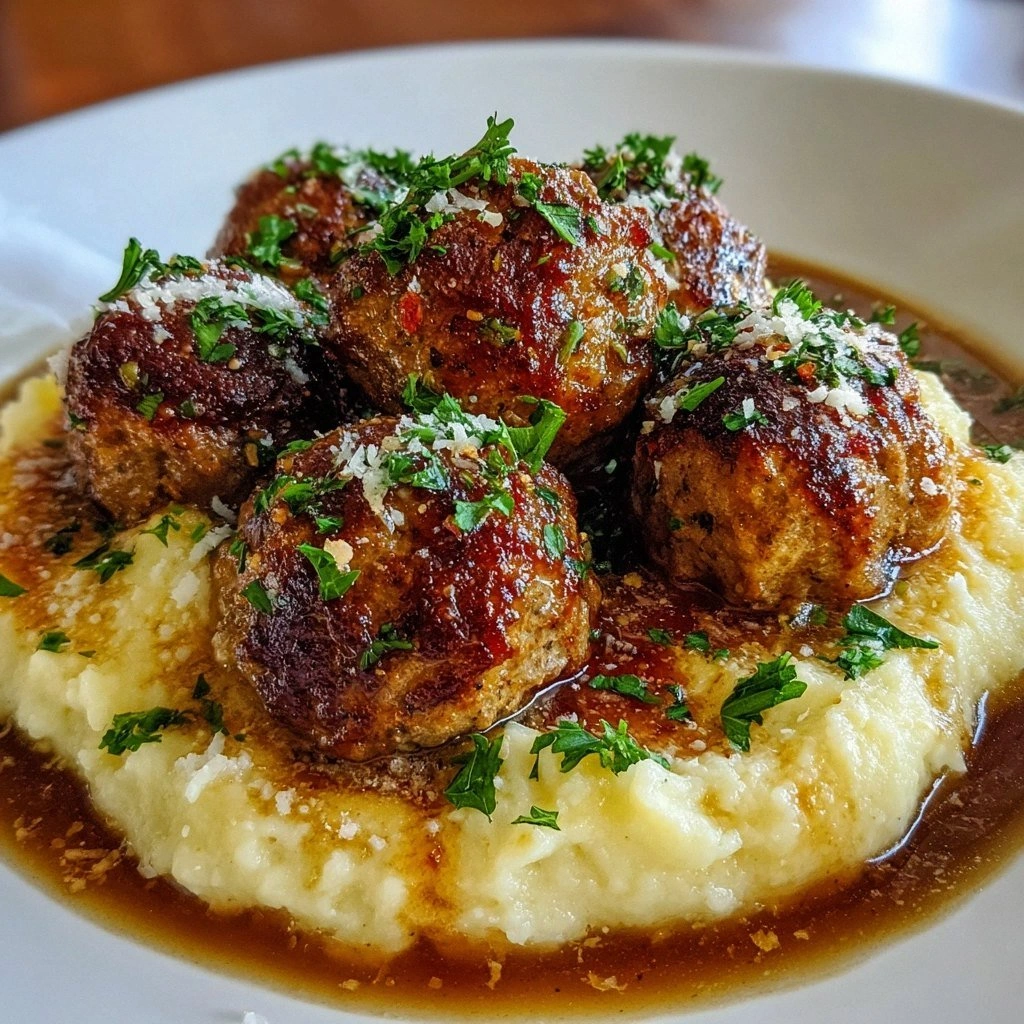
I was in the middle of a frantic Sunday dinner, juggling a pot of simmering tomato sauce, a skillet of sautéed onions, and a stubborn bag of frozen peas that had refused to thaw. I glanced over at the pantry, saw the lone package of ground beef, and thought, “Why not turn this chaos into a show‑stopper?” That night, after a few missteps and a burnt onion that smelled like a smoky campfire, I discovered a version of Brown Gravy Beef Meatballs that turns the ordinary into the extraordinary. The moment the pan sizzled, the air filled with a caramelized aroma that made my kitchen feel like a gourmet restaurant. Every bite was a burst of umami, a silky sauce that clung to the meatballs like a velvet cloak, and a buttery mash that melted in your mouth. If you’ve ever wrestled with bland meatballs or soggy gravy, this recipe will feel like a secret handshake to flavor mastery.
Picture this: you’re rolling tiny beef spheres, each one a perfect little pocket of savory joy. The meat’s juices mingle with a splash of tomato paste and a whisper of Worcestershire, creating a sauce that thickens into a glossy, comforting blanket. The mash on the side is creamy, butter‑laden, and the subtle sweetness of the potatoes balances the richness of the meat. The whole plate is a symphony of textures—crisp edges, tender centers, silky sauce, and fluffy mash—all dancing together. I dare you to taste this and not go back for seconds. I’ve tasted so many meatball recipes, but none have matched the depth of flavor and the sheer satisfaction of this one.
What makes this version stand out isn’t just the ingredients; it’s the technique. I’ve stripped away the fluff, kept the meat lean but juicy, and added a secret ingredient that gives the gravy a depth you’ll find in fine restaurants. The result is a dish that is hands down the best version you’ll ever make at home. If you’ve ever struggled with meatballs that fall apart or gravy that feels thin, you’re not alone—and I’ve got the fix. Stay with me here—this is worth it. Let me walk you through every single step, and by the end, you’ll wonder how you ever made it any other way.
What Makes This Version Stand Out
- Taste: The combination of tomato paste, Worcestershire sauce, and a splash of beef broth creates a complex umami profile that lingers on the palate.
- Texture: The meatballs remain moist inside while developing a caramelized crust on the outside, thanks to a quick sear and the right fat ratio.
- Ease: Every step can be completed in under an hour, making it a practical dinner for busy weeknights.
- Uniqueness: A dash of flour is added to the gravy at the end, thickening it without turning it into a roux, which keeps the sauce silky.
- Crowd Reaction: Friends who’ve tried other meatball recipes keep asking for the secret ingredient.
- Ingredient Quality: Using fresh, high‑quality ground beef and homemade mashed potatoes elevates the entire dish.
- Cooking Method: A two‑stage cooking process—first browning the meatballs, then simmering them in the gravy—ensures maximum flavor extraction.
- Make‑Ahead Potential: The dish can be prepared a day ahead; the gravy thickens overnight, and the meatballs can be reheated without losing their texture.
Inside the Ingredient List
The Flavor Base
Ground beef is the cornerstone of any meatball recipe, but the cut matters. Opt for a blend that’s 80/20 lean-to-fat ratio; the fat renders into the meatballs, keeping them juicy. The beef’s natural sugars caramelize when seared, forming a flavorful crust that locks in moisture. If you’re watching calories, a leaner blend works, but you’ll need to add a tablespoon of olive oil to compensate for the lost fat. The beef also serves as the primary carrier for the savory elements of the sauce.
The Texture Crew
Breadcrumbs are the binder that keeps the meatballs from falling apart. They absorb excess moisture and give the mixture a firmer structure. Use fresh breadcrumbs for best results; stale ones can make the meatballs soggy. Grated Parmesan adds a salty, nutty flavor and a slight crunch if you’re generous. The egg acts as a natural glue, holding everything together while adding richness. The flour used later in the gravy thickens it without creating a heavy roux; this keeps the sauce silky and light.
The Unexpected Star
Tomato paste might seem ordinary, but it’s a flavor powerhouse. It brings concentrated tomato flavor and a slight sweetness that balances the acidity of the beef broth. Worcestershire sauce introduces a tangy depth with anchovy, molasses, and spices. Together, they create a sauce that’s both robust and nuanced. If you’re vegetarian, you can replace the beef broth with a vegetable stock and use a plant‑based meat substitute.
The Final Flourish
Butter is the secret to that buttery mash that pairs so well with the meatballs. It adds richness and a glossy sheen. Milk gives the mash a creamy texture; you can use heavy cream for an even richer mash, but that adds calories. Salt to taste is essential—do not forget to season both the meatballs and the gravy. A pinch of black pepper adds a subtle heat that balances the sweetness of the tomato paste. Finally, a splash of milk or cream in the gravy keeps the sauce silky and prevents it from drying out.
Everything’s prepped? Good. Let’s get into the real action.
The Method — Step by Step
- In a large bowl, combine the ground beef, breadcrumbs, grated Parmesan, egg, minced garlic, diced onion, salt, and pepper. Mix with your hands until just combined; overmixing will make the meatballs tough. The mixture should be moist but hold together when pressed. This is the moment of truth—don’t rush it.
- Shape the mixture into 1‑inch spheres, about 24 in total for four servings. Place them on a parchment‑lined tray to keep them from sticking. If you’re short on time, you can roll them in a bowl of flour to prevent sticking later.
- Heat 2 tablespoons of olive oil in a large skillet over medium‑high heat. Once shimmering, add the meatballs in batches, leaving space between each. Sear them until a golden crust forms, about 3–4 minutes per side. Do not overcrowd the pan; this will lower the temperature and cause them to steam.
- Remove the browned meatballs and set aside. In the same skillet, pour in 1 cup of beef broth and scrape up any browned bits with a wooden spoon. This deglazing step pulls out the flavor locked in the pan.
- Add 1/4 cup of tomato paste and 1 tablespoon of Worcestershire sauce to the broth. Stir until fully incorporated; the sauce should thicken slightly and develop a glossy sheen. The aroma at this point is absolutely intoxicating.
- Return the meatballs to the skillet, nestling them into the sauce. Reduce the heat to low, cover, and simmer for 15 minutes, allowing the meatballs to absorb the flavors and cook through. The edges will start pulling away, signaling that they’re ready.
- While the meatballs finish, prepare the mashed potatoes. Boil 1 pound of peeled, cubed potatoes until tender, about 15 minutes. Drain and return them to the pot.
- Add 2 tablespoons of butter and 1/4 cup of milk to the potatoes. Mash until smooth, seasoning with salt to taste. The result should be fluffy, buttery, and silky.
- Finish the gravy by whisking in 2 tablespoons of flour into the skillet; this will thicken the sauce without forming lumps. Stir constantly for 1–2 minutes until the sauce thickens and turns a deep amber color. The final sauce should coat the meatballs like velvet.
That’s it—you did it. But hold on, I’ve got a few more tricks that will take this to another level. These insider tips will help you nail the texture, flavor, and presentation every time.
Insider Tricks for Flawless Results
The Temperature Rule Nobody Follows
Many people think searing meatballs at high heat will lock in juices, but the truth is a moderate sear is best. Heat the pan until it’s hot but not smoking; a quick sear will create a crust without drying out the interior. If the pan is too hot, the outside will burn before the inside cooks.
Why Your Nose Knows Best
Smell the sauce as it simmers. A faint, sweet, caramelized aroma means the flavors are developing. If it smells overly acidic, let it cook a bit longer to mellow the acidity. Your nose is a reliable indicator of doneness.
The 5‑Minute Rest That Changes Everything
After removing the meatballs from the skillet, let them rest for five minutes on a warm plate. This allows the juices to redistribute, ensuring each bite is juicy. A friend tried skipping this step once; let me just say it didn’t end well—dry meatballs, anyone?
Use Fresh Herbs for a Burst of Color
Finishing the dish with a sprinkle of fresh parsley or basil adds a pop of color and a fresh flavor that cuts through the richness. It also gives the dish a professional, restaurant‑style finish.
Don’t Forget the Butter in the Gravy
Adding a tablespoon of butter to the gravy right at the end brings a silky mouthfeel and a subtle sheen. It also balances the acidity of the tomato paste, creating a harmonious sauce.
Creative Twists and Variations
This recipe is a playground. Here are some of my favorite ways to switch things up:
Spicy Cajun Meatballs
Add a teaspoon of Cajun seasoning to the meat mixture and a splash of hot sauce to the gravy. The result is a fiery kick that pairs wonderfully with the buttery mash.
Mushroom & Spinach Meatballs
Sauté chopped mushrooms and spinach in butter, then fold them into the meat mixture. The earthy flavor adds depth, and the spinach keeps the meatballs moist.
Italian Sausage Swap
Replace the ground beef with Italian sausage for a spicier, more aromatic meatball. Adjust the seasoning accordingly to avoid over‑salted results.
Coconut Curry Gravy
Use coconut milk instead of beef broth and add a tablespoon of curry powder to the sauce. Serve over jasmine rice for a tropical twist.
Low‑Carb Mash Alternative
Swap the potatoes for cauliflower florets. Steam until tender, then mash with butter and cream for a low‑carb, keto‑friendly side.
Herb‑Infused Meatballs
Add chopped rosemary, thyme, and oregano to the meat mixture. The herbs infuse the meatballs with a fragrant, Mediterranean flavor profile.
Storing and Bringing It Back to Life
Fridge Storage
Store cooked meatballs and gravy separately in airtight containers in the refrigerator for up to 4 days. Keep the mash in a separate container to preserve its texture.
Freezer Friendly
Freeze cooked meatballs in a single layer on a parchment‑lined tray, then transfer to a freezer bag. The gravy can be frozen in a high‑quality container for up to 3 months. Reheat slowly on the stove to maintain moisture.
Best Reheating Method
When reheating, add a splash of water or broth to the gravy to restore its silky texture. Reheat gently over low heat, stirring frequently, until heated through.