I'll confess something that'll probably make you laugh: I once tried to impress a date by making salmon, and instead of the restaurant-quality masterpiece I envisioned, I served what looked like a sad, gray hockey puck floating on wilted lettuce. The relationship didn't last, but my obsession with creating the perfect salmon salad did. Fast forward three years, hundreds of tests, and one too many overcooked fillets later, and I finally cracked the code to the most ridiculously flavorful, herb-crusted salmon salad that'll make you question everything you thought you knew about healthy eating.
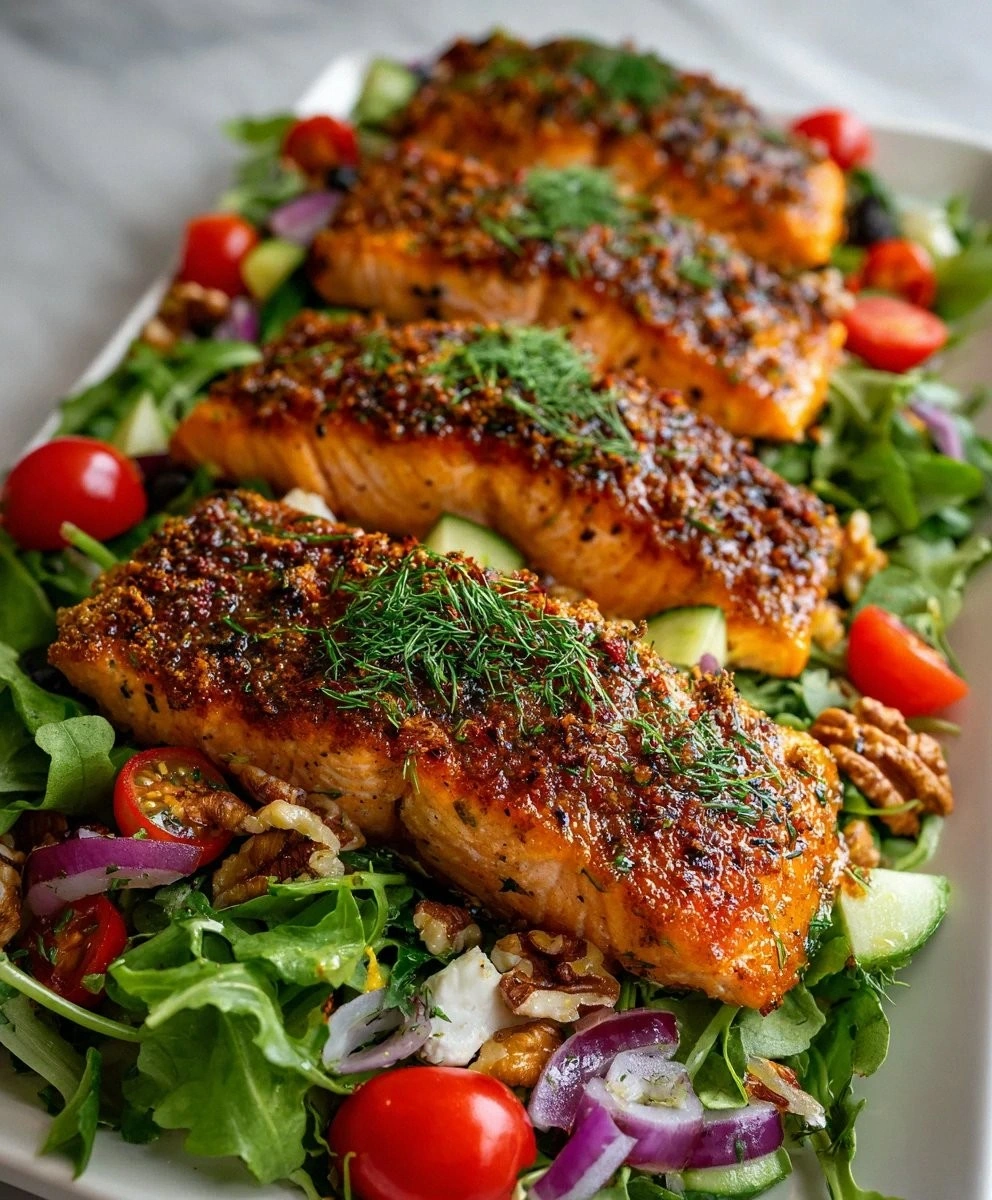
Picture this: crispy-edged salmon that's still buttery in the center, coated with an herby crust that tastes like springtime exploded in your mouth, all resting on a bed of greens that actually have personality. The first time I nailed this recipe, I stood in my kitchen at midnight, eating straight from the serving platter like some kind of crazed food maniac. My roommate walked in, raised an eyebrow, and without saying a word, grabbed a fork and joined me. We demolished the entire thing in silence, only stopping to nod at each other like we'd just discovered some ancient culinary secret.
Here's the thing that drives me absolutely bonkers about most salmon salad recipes: they treat the salmon like an afterthought, some dry protein you toss on top of sad lettuce as penance for last night's pizza. This version? The salmon is the star, the hero, the main event that makes you forget you're eating something good for you. I dare you to taste this and not go back for seconds. Actually, I double-dog dare you, because I know you'll lose that bet spectacularly.
What makes this recipe borderline magical isn't just one thing — it's the way the herb crust creates this insane textural contrast, or how the tangy vinaigrette cuts through the richness like a perfectly timed joke. Stay with me here — this is worth it. By the time we're done, you'll have a restaurant-worthy dish that costs a fraction of takeout and tastes approximately a million times better. Let me walk you through every single step — by the end, you'll wonder how you ever made it any other way.
What Makes This Version Stand Out
Crust Perfection: Most recipes get this completely wrong, creating a soggy herb paste that slides off faster than my motivation on a Monday morning. We use a technique that creates a crust so crispy it shatters like thin ice, yet somehow keeps the salmon underneath impossibly moist. The secret? We let the herbs dry slightly before pressing them onto the fish, creating a barrier that locks in moisture while browning to perfection.
Flavor Bomb: This isn't your typical "sprinkle some dill and call it a day" situation. We're talking about a triple-threat of fresh parsley, dill, and chives that creates this symphony of herby goodness. Each herb brings its own personality — parsley for brightness, dill for that classic salmon partnership, and chives for a gentle oniony kick that makes everything taste more alive.
Texture Heaven: Picture crispy-edged salmon, tender greens, juicy tomatoes, and crunchy nuts all in one bite. It's like a party where everyone's invited and somehow they all get along perfectly. Most recipes miss this entirely, giving you one-note mush that makes eating healthy feel like punishment.
Weeknight Friendly: Okay, ready for the game-changer? This entire dish comes together in under 45 minutes, and most of that is hands-off oven time. While the salmon roasts, you're whipping up the vinaigrette and tossing the salad. Multitasking at its finest, and you won't even break a sweat.
Make-Ahead Magic: Unlike those sad desk salads that wilt faster than my enthusiasm for kale, this one actually holds up. The salmon can be cooked ahead and served cold or room temperature, making it perfect for meal prep or fancy lunch boxes that'll make your coworkers jealous.
Restaurant Quality: Future pacing here: picture yourself pulling this out of the oven, the whole kitchen smelling incredible, and knowing you're about to serve something that costs $28 at a restaurant. Your dinner guests will think you secretly trained at culinary school, and honestly, let them think that.
Nutritional Powerhouse: We're talking omega-3s, lean protein, healthy fats, and more vitamins than you can count. But here's the kicker — it tastes so good you'll forget it's actually good for you. Finally, a win-win situation that doesn't involve eating cardboard disguised as food.
Alright, let's break down exactly what goes into this masterpiece...
Inside the Ingredient List
The Flavor Foundation
Let's talk salmon, because this is where most people mess up spectacularly. You want skinless fillets that are about 1.5 inches thick — any thinner and they overcook before the crust forms, any thicker and you risk raw centers while burning your herbs. Look for fillets with that vibrant coral color, firm flesh that springs back when poked, and absolutely zero fishy smell. I always buy mine the day I'm cooking, but if you must buy ahead, wrap it tightly and use within 24 hours for best results.
The olive oil isn't just any olive oil — you want the good stuff here because it carries all those herb flavors and creates the most gorgeous crust. Think of it as the vehicle that delivers all the goodness to your taste buds. Skip the bargain bottle that's been sitting in your pantry since 2019 and splurge on something that actually tastes like olives, not motor oil.
The Herb Trinity
Fresh parsley is non-negotiable here, and here's why: dried parsley tastes like disappointment and lawn clippings had a baby. Fresh parsley adds this bright, almost lemony note that makes everything taste cleaner and more vibrant. When you're picking it out, look for bunches that stand up proudly, not the ones lying down like they've given up on life.
Fresh dill is your salmon's soulmate — they've been trying to find each other for years, and when they finally meet, it's culinary magic. Don't you dare substitute dried dill unless you want your salmon to taste like dusty sadness. The fresh stuff has this incredible ability to make salmon taste more like salmon, if that makes sense.
Chives are the sophisticated cousin of green onions, bringing a delicate onion flavor that won't overwhelm the party. They're like that friend who always knows exactly what to say to make everyone feel included. If you absolutely must substitute, green onion tops work, but you'll lose some of that subtle elegance.
The Supporting Cast
Dijon mustard is your secret weapon for getting that herb crust to stick like it owes you money. It also adds this incredible depth of flavor that makes people ask "what's in this?" in the best way possible. I've tried using regular yellow mustard, and it's like showing up to a black-tie event in jeans — technically clothes, but completely wrong for the occasion.
That touch of lemon juice isn't just for brightness — it actually helps tenderize the salmon slightly while adding a zing that makes all the herbs pop. Fresh lemon only, please. The bottled stuff tastes like lemon's depressed cousin who's been sitting in a plastic container for months.
The Salad Squad
Mixed salad greens are where you get to play mixologist, combining arugula's peppery bite, spinach's earthiness, and romaine's crunch. Each green brings its own superpower to the party, creating a base that's way more interesting than sad iceberg lettuce. Plus, they all have different nutritional profiles, so you're basically eating a multivitamin disguised as salad.
Cherry tomatoes should feel heavy for their size and smell like summer when you sniff the stem end. If they don't smell like anything, they won't taste like anything either. I always grab a mix of colors because it makes the salad look like a party, and we eat with our eyes first.
English cucumber is your hydration hero, adding crunch without that bitter afterthought that regular cucumbers sometimes bring. Plus, you don't have to peel them or deal with those giant seeds that get stuck in your teeth. Just slice and go — it's the lazy cook's dream vegetable.
Red onion provides that crucial sharp note that cuts through all the richness, but here's the key: slice it paper-thin and let it sit in ice water for 10 minutes. This takes away that aggressive bite while keeping the flavor. Your breath will thank you, and so will anyone you plan on speaking to after dinner.
Everything's prepped? Good. Let's get into the real action...
The Method — Step by Step
- Preheat your oven to 425°F (220°C) and position a rack in the upper third of the oven. This temperature is crucial — hot enough to create that crispy crust but not so hot that the herbs burn before the salmon cooks through. While it's heating, line a baking sheet with parchment paper or a silicone mat. Trust me, you don't want to skip this step unless you enjoy chiseling herb crust off your pan like some kind of culinary archaeologist.
- Pat your salmon fillets absolutely dry with paper towels, pressing gently but firmly. Any residual moisture is the enemy of crispiness and will create steam that ruins everything. Season both sides generously with salt and pepper — this is your only chance to season the fish itself, so don't be shy. The salt helps draw out moisture and concentrates the salmon's natural flavors.
- In a small bowl, mix together your chopped herbs, garlic powder, and a pinch of salt. The herbs should be finely chopped but not pulverized — you want to see their beautiful green color and texture in the final dish. This is where the magic starts happening, and that incredible aroma when you mix them together? Absolute perfection.
- In another small bowl, whisk together the Dijon mustard, lemon juice, and olive oil until it forms an emulsified paste. This is your glue, and it needs to be the consistency of loose mayonnaise. If it's too thick, add a tiny splash of water; too thin, add a bit more mustard. The goal is something that'll spread easily but won't slide right off the fish.
- Brush the mustard mixture over the top and sides of each salmon fillet, making sure to get into all the nooks and crannies. Don't put it on the bottom — we want that direct contact with the pan for proper searing. The layer should be thin but complete, like you're giving the salmon a beautiful mustard jacket.
- Press the herb mixture onto the mustard-coated surface, using your fingers to really pack it on. Don't be delicate here — press firmly so the herbs adhere properly. The crust should be about 1/8 inch thick, enough to create that textural contrast but not so thick that it falls off during cooking. Let this sit for 5 minutes while the oven finishes heating.
- Slide the baking sheet into the oven and roast for 12-15 minutes, depending on the thickness of your fillets. This is the moment of truth — don't walk away from the oven here. You're looking for the edges of the herb crust to turn golden brown and crispy, the salmon to flake easily but still be slightly translucent in the center, and that incredible aroma to fill your kitchen.
- While the salmon roasts, whisk together your vinaigrette ingredients: olive oil, vinegar or lemon juice, honey, and Dijon mustard. Season with salt and pepper, then taste and adjust. It should be bright and tangy with just enough sweetness to balance everything. The vinaigrette should coat a spoon but still be pourable.
- Remove the salmon from the oven and let it rest for 5 minutes. This is crucial — the resting time allows the juices to redistribute throughout the fish, ensuring every bite is moist and flavorful. While it rests, toss your salad greens with just enough vinaigrette to coat them lightly. You want them shiny but not swimming in dressing.
- Plate the dressed greens, top with the remaining vegetables, then crown each plate with a piece of herb-crusted salmon. Drizzle a little extra vinaigrette over the salmon if desired, and serve immediately. The contrast between the warm, crispy salmon and the cool, crisp salad is what dreams are made of.
That's it — you did it. But hold on, I've got a few more tricks that'll take this to another level...
Insider Tricks for Flawless Results
The Temperature Rule Nobody Follows
Here's the thing that'll make you look like a salmon wizard: use a meat thermometer. I know, I know — it feels fancy and unnecessary, but hear me out. Pull your salmon at 125°F (52°C) for medium-rare or 130°F (54°C) for medium. The temperature will rise another 5 degrees as it rests, giving you perfectly cooked fish every single time. A friend tried skipping this step once — let's just say it didn't end well, and we ended up ordering pizza while his overcooked salmon sat there looking like punishment.
Why Your Nose Knows Best
Your nose is actually the most reliable tool for knowing when this salmon is done. When you start smelling the herbs turn from fresh and green to toasted and nutty, you're about 2 minutes away from perfection. That smell when the crust hits the right level of golden? Pure magic. If you've ever struggled with timing, trust your nose — it's been evolving for thousands of years to detect exactly when food is at its peak.
The 5-Minute Rest That Changes Everything
I cannot stress this enough: let your salmon rest. I know it's tempting to dive right in while it's piping hot, but those 5 minutes of patience will reward you with the most succulent, evenly cooked fish you've ever made. During this time, the proteins relax, the juices redistribute, and what could be dry edges transform into buttery perfection. Plus, it gives you time to finish the salad and pour yourself a glass of wine.
The Herb Oil Secret
Want to know what restaurants do that home cooks don't? They save the oil that drips off the salmon during cooking. Strain it through a fine-mesh sieve and drizzle it over your plated salad — it's infused with all those amazing herb flavors and adds another layer of complexity. I learned this trick from a chef friend, and honestly, it feels like cheating.
Crust Revival Technique
If your crust isn't quite as crispy as you'd like, here's a pro move: hit it with your kitchen torch for 30 seconds, or pop it under the broiler for 1-2 minutes. This crisps up the herbs without overcooking the salmon underneath. Just watch it like a hawk — herbs go from perfectly toasted to burnt disappointment faster than my motivation for morning workouts.
Creative Twists and Variations
This recipe is a playground. Here are some of my favorite ways to switch things up:
Mediterranean Sunset Version
Swap the dill for fresh oregano and basil, add some kalamata olives and artichoke hearts to the salad, and use red wine vinegar in the vinaigrette. Top with crumbled feta and suddenly you're dining on a Greek island. The herbs in the crust complement the Mediterranean vibe perfectly, and you'll feel like you're on vacation even if you're eating at your desk.
Asian-Inspired Fusion
Replace the parsley with fresh cilantro, add some grated ginger to the mustard mixture, and include a tablespoon of sesame oil in the vinaigrette. Swap the walnuts for toasted sesame seeds and add some thinly sliced radishes for crunch. The result is this incredible fusion that somehow works even better than the original.
Spicy Southwest Style
Add a teaspoon of smoked paprika and some chipotle powder to the herb mixture, use lime juice instead of lemon, and include black beans and roasted corn in your salad. The smoky heat plays beautifully with the herbs, and suddenly you've got a salad that tastes like it came from your favorite Tex-Mex spot.
Autumn Harvest Edition
Use sage and thyme instead of dill and chives, add some roasted butternut squash cubes to the salad, and include toasted pecans. The warm, earthy flavors make this perfect for cooler weather, and the colors are absolutely stunning. This version converts even the most salad-skeptic people I know.
Protein-Packed Power Version
Add some cooked quinoa to the salad, double the salmon portions, and include some hard-boiled egg quarters. This turns it from a light lunch into a serious meal that'll fuel you through anything. My gym-rat friends swear by this version for post-workout recovery.
Low-Carb Green Machine
Skip the cherry tomatoes and load up on cucumber, celery, and zucchini noodles instead of mixed greens. Use avocado oil in the vinaigrette and add some hemp seeds for extra healthy fats. It's like the keto gods decided to be generous and actually make low-carb food that doesn't taste like punishment.
Storing and Bringing It Back to Life
Fridge Storage
Here's the reality: this salmon is best fresh, but life doesn't always cooperate with our culinary timing. Store cooked salmon in an airtight container in the fridge for up to 3 days, but keep it separate from the salad components. The herb crust will lose some of its crunch, but the flavor actually intensifies overnight. When you're ready to eat, let it come to room temperature for 15 minutes — cold salmon straight from the fridge is about as appealing as day-old coffee.
Freezer Friendly
Okay, ready for the game-changer? You can freeze the cooked salmon for up to 2 months. Wrap each fillet tightly in plastic wrap, then foil, then pop into a freezer bag. Thaw overnight in the fridge, then revive it in a 300°F oven for 8-10 minutes. It's not quite as good as fresh, but it's about 90% there, which beats most restaurant salmon anyway.
Best Reheating Method
This next part? Pure magic. To reheat without drying out, place the salmon in a covered baking dish with a tablespoon of water in the bottom. Cover with foil and warm at 275°F for about 10 minutes, or until just heated through. The steam keeps it moist while the gentle heat warms it evenly. I've also had success crumbling cold salmon over salads or mixing it into pasta — sometimes the second-day applications are even better than the original.