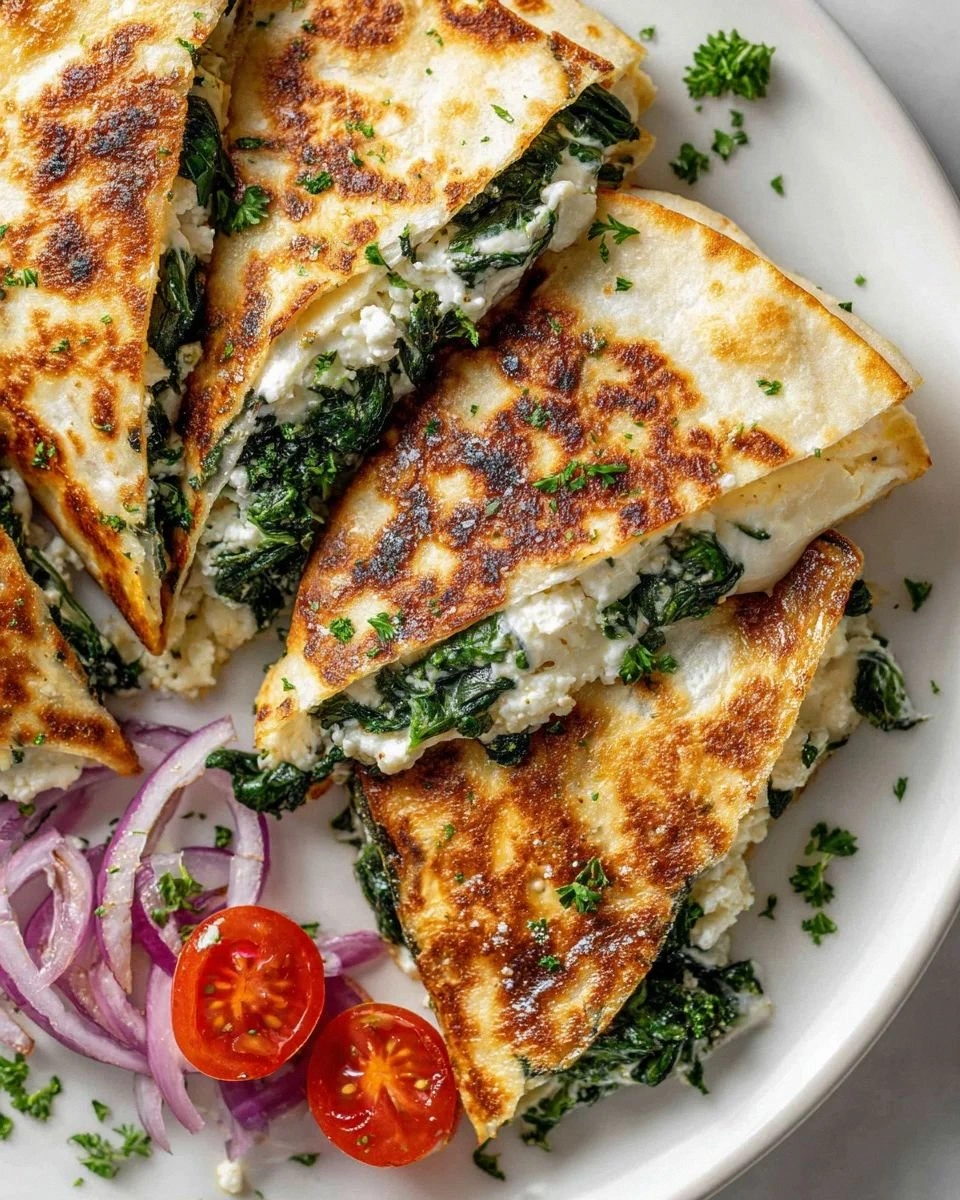
Picture this: It's 2 a.m., I'm standing in my kitchen wearing mismatched socks, and I'm staring at a half-empty bag of baby spinach that's about to go slimy. My stomach's growling like an angry bear, and all I want is something that hits that perfect middle ground between "I'm an adult who should eat vegetables" and "I need melted cheese in my face right now." The usual quesadilla feels too basic, but I'm not trying to whip up some Michelin-starred production either. That's when it hits me — what if the Mediterranean and Mexico had a beautiful, cheesy baby? What if I could take everything I love about spanakopita, stuff it into a quesadilla, and make it in under fifteen minutes?
Fast forward through three trials, two near-fire incidents, and one very confused roommate who wandered in asking why it smelled like a Greek taverna collided with a Mexican cantina, and here we are. These Mediterranean Quesadillas aren't just another fusion gimmick — they're what happens when spanakopita's sophisticated older cousin shows up to the quesadilla party and absolutely steals the show. The spinach wilts into silky submission, the feta brings that tangy punch that makes your taste buds sit up and pay attention, and the mozzarella creates those Instagram-worthy cheese pulls that'll have your followers sliding into your DMs faster than you can say "opa."
But here's the real kicker — most recipes get this completely wrong. They either go too heavy on the feta (hello, salty disaster) or they forget that spinach needs some serious flavor backup to not taste like sad lawn clippings. This version? It's got the perfect cheese ratio that took me three bags of mozzarella and one very understanding grocery store clerk to perfect. The garlic hits just right, the oregano transports you straight to a sun-drenched Greek island, and those optional red pepper flakes give you that gentle warmth that builds like a summer sunset.
I dare you to taste this and not go back for seconds. I'll be honest — I ate half the batch before anyone else got to try it, standing over the sink like some kind of cheese-crazed goblin, crispy bits of tortilla falling into the drain while I justified it as "quality control." If you've ever struggled with getting your quesadillas crispy without burning them, or if you've made spanakopita and thought "this is delicious but I need it in my face faster," you're not alone — and I've got the fix. Picture yourself pulling this out of the pan, the golden-brown tortilla crackling like autumn leaves under your spatula, that first bite where the creamy cheeses mingle with the earthy spinach and you suddenly understand why fusion cuisine exists in the first place. Let me walk you through every single step — by the end, you'll wonder how you ever made it any other way.
What Makes This Version Stand Out
Cheese Harmony: This isn't just throwing feta at a tortilla and calling it Mediterranean. The mozzarella acts like the perfect mediator, melting into that stretchy blanket that holds everything together while the feta provides those explosive pockets of briny brightness. It's like they went to relationship counseling and learned to work together instead of competing for attention.
Spinach That Doesn't Suck: Most recipes treat spinach like an afterthought, but here it gets the VIP treatment. A quick sauté with garlic transforms it from sad bagged salad into something that actually tastes intentional. The trick is in the timing — just enough heat to wilt but not so much that you're left with green mush that looks like it belongs in a baby's food processor.
Texture Contrast Game Strong: We're talking crispy edges that shatter like thin ice under your teeth, giving way to a creamy interior that oozes just enough to make things interesting. The red onion provides those little pops of sharpness and crunch that keep every bite from becoming a monotextural experience.
Pantry Staple Magic: Everything in here lives in your kitchen already, no specialty store pilgrimage required. These are ingredients that hang out in most fridges like that one friend who always shows up to the party but somehow always delivers when needed.
Speed Demon Status: From zero to face-stuffing in under fifteen minutes, making this faster than delivery and infinitely more satisfying. It's the kind of recipe that makes you feel like you've got your life together even when you're eating standing over the sink at midnight.
Crowd Pleaser Supreme: I've served these at dinner parties where people tried to act sophisticated, at game nights where they competed with wings for attention, and at 3 a.m. when my night-owl friends needed something substantial. They disappear faster than free samples at Costco, and nobody believes how easy they are until you show them.
Make-Ahead Champion: These beauties reheat like champs, making them perfect for meal prep Sunday when you're pretending you'll eat something other than takeout this week. The flavors actually meld together overnight, creating something even more magical the next day.
Inside the Ingredient List
The Flavor Base
The whole wheat tortillas aren't just being all healthy on you — they bring this nutty, earthy backbone that stands up to the bold Mediterranean flavors like a champion. White tortillas get lost and turn into a sad, soggy mess, but whole wheat holds its ground and adds complexity that makes you wonder why anyone uses the plain ones. Look for ones that feel pliable but not paper-thin; you want something that can handle a serious cheese payload without tearing like tissue paper in a rainstorm.
Fresh spinach is non-negotiable here, and I will fight anyone who tries to sneak in frozen. Fresh spinach wilts into silky perfection, while frozen turns into stringy green sadness that tastes like regret and freezer burn. Give it a rough chop so you don't end up with spinach dreadlocks hanging out of your quesadilla — nobody wants to floss while they eat. One cup might look like a mountain, but spinach is the ultimate overachiever at shrinking under heat.
The Texture Crew
Feta cheese is the diva of this operation — it doesn't melt so much as it warms into these creamy pockets of salty perfection. Don't you dare buy the pre-crumbled stuff that's been sitting in its own tears for weeks. Get a block of good feta and crumble it yourself; the difference is like comparing a live concert to a scratched CD. The brininess cuts through all that richness like a sharp wit in a boring conversation.
Mozzarella is the unsung hero that makes everything possible — it's the diplomatic cheese that gets along with everyone and keeps the peace. Fresh mozzarella would be too wet and make everything soggy, so stick with the low-moisture shredded stuff that melts into that perfect stretchy blanket. One cup might seem excessive, but we're not here to be shy about cheese quantities.
The Unexpected Star
Red onion brings more than just pretty purple flecks — it's got that sharp bite that wakes up all the other flavors like an alarm clock for your taste buds. Slice it paper-thin so it mellows and sweetens as it cooks, turning from harsh to harmonious. If you're one of those people who thinks they hate raw onion, trust the process here — it becomes something entirely different once it hits that hot pan.
Garlic is the flavor foundation that everything else builds on, but it's got a delicate balance. Too little and everything tastes flat, too much and you're breathing fire for the rest of the day. One clove, minced so fine it practically dissolves, is the sweet spot that makes people ask "what's that amazing flavor?" without being able to place it.
The Final Flourish
Dried oregano is your direct flight to the Mediterranean — it's what makes these quesadillas taste like they should be served with a side of sunshine and sea views. Don't substitute fresh here; dried oregano has a more concentrated, earthy flavor that stands up to the heat. Rub it between your palms before adding to release those essential oils that have been trapped since the herb was harvested.
Red pepper flakes are optional only if you're the kind of person who thinks beige is an exciting color. That gentle heat builds slowly, creating warmth without overwhelming the delicate balance we've got going. Start with half a teaspoon if you're spice-shy — you can always add more, but you can't un-spice something that's already burning your face off.
The Method — Step by Step
- Heat your largest skillet over medium heat and add the olive oil. You want it hot enough that a piece of onion sizzles enthusiastically when it hits the pan, but not so hot that the oil smokes like it's trying to summon a genie. Swirl the oil around to coat the surface evenly — think of it as creating a non-stick force field for your future self. That sizzle when the onion hits the pan? Absolute perfection. Let them cook for about two minutes, stirring occasionally, until they start to turn translucent and your kitchen smells like you actually know what you're doing.
- Add the minced garlic and stir constantly for thirty seconds. This is where timing becomes everything — garlic goes from fragrant to bitter faster than a teenager's mood swing. You want it just golden and smelling like you should bottle it as cologne. If it starts turning brown, you've gone too far and will spend the rest of the dish trying to cover up that acrid edge. The aroma should make you want to face-plant into the pan, not recoil in horror.
- Pile in all that spinach — yes, all of it, even though it looks like enough to feed a small rabbit colony. It will seem impossible that it'll all fit, but spinach is the ultimate shrinker, like that sweater you accidentally put in the dryer. Use tongs to turn it over in the garlicky oil, coating every leaf in that flavorful foundation. Within two minutes, it'll wilt down to a manageable pile that looks like you actually knew what you were doing all along. Season with a pinch of salt and pepper — just enough to make the spinach taste like itself, only better.
- Remove the spinach mixture to a bowl and let it cool for about five minutes. This isn't just being patient for patience' sake — hot spinach will melt the cheese into a sad, separated mess that no amount of optimism can fix. While it cools, wipe out your pan with a paper towel because we're about to create crispy magic and any leftover bits will burn like tiny charcoal briquettes. The spinach should be cool enough that you can touch it without yelping and pulling your hand away like it betrayed you.
- Lay out your tortillas on a clean surface and divide the cheeses between them, sprinkling evenly over half of each tortilla. This is not the time to be stingy — cheese is the glue that holds our dreams together, and these quesadillas deserve ambitious dreams. Leave about half an inch border around the edge because cheese has this sneaky habit of escaping during cooking, creating burnt little cheese crisps that set off smoke alarms and test roommate relationships. The feta should be crumbled into different sizes — some tiny pieces that melt into the background and some bigger chunks that create those signature salty explosions.
- Distribute the spinach mixture evenly over the cheese, making sure each bite will have that perfect greens-to-cheese ratio. Nobody wants to bite into a quesadilla and find a spinach desert, but you also don't want a giant clump that makes everything fall apart like a bad relationship. Think of it as creating a balanced ecosystem where every ingredient has its place and purpose. The spinach should be in small enough pieces that it doesn't create mountains that prevent proper sealing.
- Fold each tortilla in half over the filling, pressing down gently to create a half-moon of potential deliciousness. Don't press too hard or the filling will squish out like it's trying to escape — just enough to make everything cohesive. The seam should be tight enough that cheese can't leak out during cooking but not so tight that you compress everything into a dense, sad pancake. This is the moment where your quesadilla transforms from a pile of ingredients into an actual thing that looks like dinner.
- Return the same skillet to medium heat and spray lightly with cooking spray or brush with olive oil. You want just enough fat to prevent sticking but not so much that you're essentially frying your quesadilla in a pool of oil. The pan is ready when a tiny piece of tortilla sizzles gently when it touches the surface — not angry sizzling like it's trying to fight you, but a gentle sizzle like it's happy to see you. Place two folded quesadillas in the pan (or however many fit without crowding) and don't touch them for three whole minutes.
- Cook for 3-4 minutes on the first side, until the bottom is golden brown and crispy. This is the moment of truth where patience pays off in spades. Don't peek every thirty seconds — every time you lift the edge, you're letting out heat and preventing that perfect crust from forming. When it's ready, the quesadilla will release easily from the pan; if it's sticking, it's not ready yet. The bottom should be a beautiful mottled brown that makes you want to take a picture for your food Instagram.
- Flip carefully using a large spatula and your hand to support the top, cook the second side for 2-3 minutes until equally golden and the cheese is completely melted. This side usually cooks faster since the pan is hotter now, so stay vigilant like you're guarding a precious treasure. The cheese should be melted through — give the quesadilla a gentle press and you should see it ooze slightly from the edges. If the center feels cold or the cheese isn't melted, lower the heat and give it another minute.
- Remove to a cutting board and let rest for exactly two minutes. I know, I know — you're starving and it smells like heaven and all you want to do is face-plant into cheesy glory. But cutting too early means all that molten cheese escapes like lava from an erupting volcano, leaving you with a sad, empty tortilla. Two minutes is the magic number where everything sets enough to stay put but not so long that it becomes a cold, congealed disappointment.
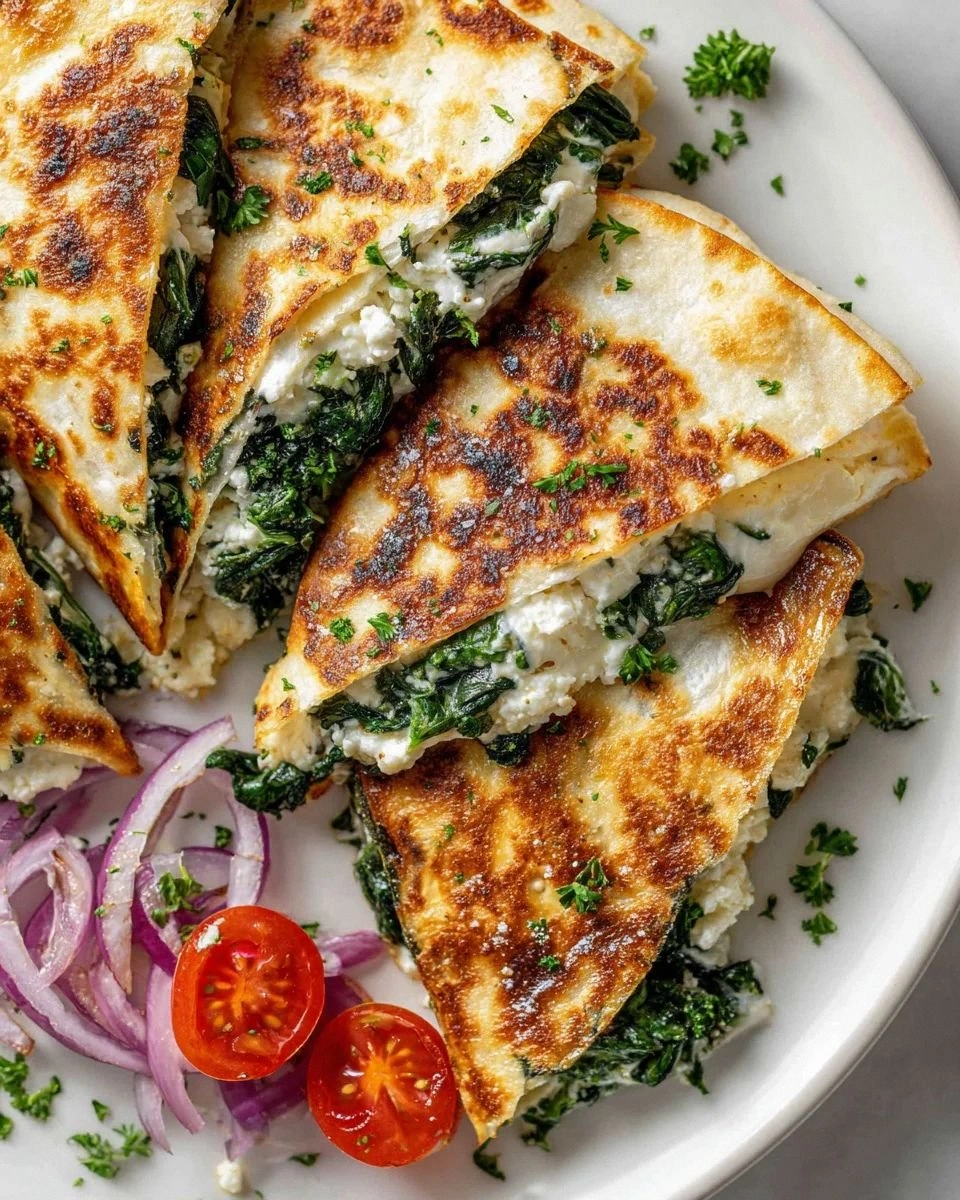
- Slice into wedges and serve immediately, while the cheese is still stretchy and the edges are crispy enough to provide that satisfying crunch. The first bite should be a perfect balance of crispy exterior and creamy interior, with the feta providing little salty surprises throughout. If you've done it right, you'll need to tilt your head slightly to catch the cheese pull as you lift each wedge. And now the fun part — watch everyone's eyes go wide when they taste what you've just created.
That's it — you did it. But hold on, I've got a few more tricks that'll take this to another level...
Insider Tricks for Flawless Results
The Temperature Rule Nobody Follows
Here's what actually works: start your pan at medium, then drop it to medium-low after the first flip. Most recipes tell you to keep it at one temperature throughout, but that's like trying to bake a cake at the same temp you'd use for roasting vegetables. The initial higher heat creates that gorgeous golden crust, but finishing at a lower temperature ensures the cheese melts completely without turning the outside into charcoal. A friend tried skipping this step once — let's just say it didn't end well, and her smoke detector still hasn't forgiven her.
Why Your Nose Knows Best
Don't trust your eyes alone — trust your nose. When the garlic is perfectly cooked, your kitchen will smell like you've been transported to a Mediterranean grandmother's kitchen. If it starts smelling sharp or acrid, you've crossed the line into bitter territory and there's no going back. The same goes for the overall cooking process — when everything's working in harmony, it should smell like you want to bottle the air and sell it as fancy candle scent.
The 5-Minute Rest That Changes Everything
After cooking your spinach mixture, spread it on a plate in a thin layer. This isn't just about cooling — it's about concentrating flavors as the moisture evaporates, creating a more intense spinach experience that won't water down your quesadilla. Five minutes on a plate versus in a bowl is the difference between soggy disappointment and crisp perfection. Plus, it gives you time to grate that mozzarella if you decided to be ambitious and go fresh instead of pre-shredded.
The Double Pan Method for Maximum Crisp
If you're feeding a crowd and need to make multiple quesadillas, heat two pans simultaneously and stagger the cooking. Keep the finished ones in a 200°F oven on a wire rack (not a plate — steam is the enemy of crispiness) while you cook the rest. The wire rack allows air circulation, keeping them crispy instead of turning them into sad, soggy shadows of their former glory. This is how restaurants get that perfect texture even when orders are flying in like crazy.
The Cheese Blend Secret
Okay, ready for the game-changer? Save a tablespoon of feta to sprinkle on top right before serving. The contrast between the melted feta inside and the fresh, crumbly feta on top creates a textural experience that'll make you wonder why every recipe doesn't do this. It's like having two different cheeses in one dish, playing off each other in perfect harmony.
Creative Twists and Variations
This recipe is a playground. Here are some of my favorite ways to switch things up:
The Greek Village Version
Add a handful of chopped Kalamata olives and some diced fresh tomato (seeds removed so it doesn't get watery) to the filling. The olives bring that intense, wine-cured flavor that makes everything taste like you're dining in a tiny taverna where the owner's grandmother is cooking in the back. The tomatoes add little bursts of freshness that cut through all that richness like a squeeze of lemon on a rich stew.
The Spanish Holiday Variation
Swap the oregano for smoked paprika, add some chopped roasted red peppers, and use manchego cheese instead of mozzarella. Suddenly you're not in Greece anymore — you're in Spain, drinking wine at 2 p.m. because that's what you do when the cheese is this good. The smoked paprika adds depth that makes everything taste like it's been cooked over an open flame, even if you're just using your boring electric stove.
The French Riviera Remix
Add some fresh basil and a few slices of brie (remove the rind) along with the other cheeses. It's like the Mediterranean and French Riviera had a beautiful love child that's too sophisticated for its own good but somehow still approachable. The brie adds this unctuous creaminess that makes the whole thing feel ridiculously luxurious, like you should be eating it while wearing a striped shirt and discussing existential philosophy.
The California Health Nut
Add some mashed avocado and swap the whole wheat tortilla for a spinach one if you're feeling extra virtuous. Throw in some hemp seeds for protein and you've got something that feels like it should be served at a yoga retreat but still satisfies that deep, primal cheese craving. It's healthy enough that you can justify eating two without spiraling into a shame spiral.
The Middle Eastern Mashup
Add some za'atar spice blend instead of oregano, crumble in some goat cheese with the feta, and add a handful of chopped fresh mint. It's like taking a magic carpet ride through flavor town, where every bite has you discovering new layers of complexity. The za'atar brings this incredible earthiness that makes everything taste ancient and wise, like it's been perfected over thousands of years.
The Breakfast of Champions
Add a fried egg on top with a runny yolk that breaks and creates a sauce when you cut into it. Suddenly it's breakfast, brunch, or breakfast-for-dinner, and you've elevated this from snack to meal status. The yolk mingles with the cheeses to create this unholy alliance of creamy textures that'll have you making quesadillas for breakfast way more often than is probably reasonable.
Storing and Bringing It Back to Life
Fridge Storage
Let any leftovers cool completely before wrapping individually in plastic wrap or storing in an airtight container. They'll keep for up to four days in the fridge, though honestly, they've never lasted more than two days in my house because late-night snacking is real and I'm not made of stone. The key is cooling them completely first — warm quesadillas in a sealed container create condensation that turns everything into a soggy mess that even the most desperate midnight snacker won't touch.
Freezer Friendly
These freeze beautifully for up to three months, making them perfect for emergency situations like "I don't want to cook" or "I need comfort food STAT." Wrap each quesadilla individually in plastic wrap, then place all the wrapped ones in a freezer bag with the air squeezed out. Pro tip: write the date and what's inside on the bag, because three months from now you'll be staring at a frozen brick wondering if it's quesadillas or that experimental thing you tried that one time.
Best Reheating Method
Skip the microwave unless you enjoy rubbery tortillas and sadness. Instead, reheat in a dry skillet over medium-low heat for about three minutes per side, or in a toaster oven at 350°F for 8-10 minutes. Add a tiny splash of water to the pan before covering with a lid — it creates steam that brings everything back to life without making it soggy. The result is almost as good as fresh, with crispy edges and melty centers that'll make you forget these were ever leftovers in the first place.